icm506

FREE Brooklyn

icm 506 module 9 SLIDE SHOW icm 506 module 9 SLIDE SHOW

Problem Statement:

Brooklyn neighborhoods are gentrifying rapidly. Areas that use to house projects and lower income families are quickly seeing high rises, condominiums and townhouses appearing – and they see their rent and taxes growing as well. More often than not they sell their property to developers for significantly less than its actual value, and they have no idea they are being swindled out of their property.  Then they are forced to move into different areas that may have more crime and conflict then their original neighborhoods.

Idea:

We help provide free facts, resources, education and economic knowledge to the residents of Kings County, Brooklyn. We ask lawyers, real estate agents and accountantsto provide pro-bono work for our organization and help residents in gentrifying neighborhoods understand how much their property is really worth.

We are F (facts) R (resources) E (education) E (economic knowledge) Brooklyn.

Introduction:

Homelessness. Helplessness. Hardship.

Brooklyn is a borough of New York City with dozens of different neighborhoods. It has seen many different faces over the last 400 years and constantly been changing, each period has left behind its unique mark.

In the 1970s into the 1980s the borough of Manhattan was a scary place to be, filled with drugs, prostitutes and gangs causing residents to flee the city. Developers eyed this new trend and sought to capture the new markets. The old brownstones in Brooklyn, while decaying, became significantly more appealing. While Brooklyn had its own crime troubles, developers began slowly with one neighborhood at a time.

Before you knew it housing that was once cheap and easy to rent was attracting attention from the affluent Upper East and West sides and droves of people were moving down to southern New York City- just what real estate developers wanted.

But what happens to the people who were there before them? The people who didn’t make six figures a year and were happy with their local neighborhood; its mom and pop shops, local news papers and in some communities English wasn’t the first language.

The developing happened slowly, methodically and was well done by developers. Starting slowly in communities, flipping brownstones and offering in some areas the possibility of rent control on a newly renovated buildings was enough to keep residents happy.

But sometimes management gets turned over in a few years or the building becomes a co-op or “goes condo” and all of a sudden these long standing residents have no way of paying an extremely higher rent in a short amount of time.

Project Description:


What FREE Brooklyn wants to do is make sure that all residents of Brooklyn have access to real estate knowledge.  We want them to understand legally what is available to them, and what possible future actions could be taken against them. What their real estate rights are and what it means for the future of their family. We want to give them non-biased real estate information and help with their financial questions. And we hope to do this in whatever their first language may be.

We want the playing field to be fair. We want a FREE Brooklyn.

We want to assemble a Board of Directors from all different professions and neighborhoods from Brooklyn. They would be leaders in their respective fields and have a genuine understanding of what their community needs. They would lead the non-profit in the majority of its decision-making, and have varied opinions based on their experiences and what to move forward with next. The strength of the Board is also integral in helping find lawyers, accountants and real estate agents do pro-bono work for the initiative. We would rely on their previous involvement in their communities to form these connections. Finding a Board that we can rely on with this plan would be one of our first big hurdles.

The second biggest hurdle is funding. First there are obvious out of pocket expenses – travel time, getting the word out there, probably some various forms of printing (whether it be posters, flyers or small ads in local papers). Before you can even start with KickStarter people need to know you’re starting. This is where networking will play a huge role, our first members would start to become involved in other non-for-profits that are trying to help the people of Brooklyn:

Red Hook Initiative

Cobble Hill Tree Fund

Cobble Hill Life Care

Families First Brooklyn

Atlantic Avenue Local Development Corporation

Just to name a few. While there might be competition for resources, there is still more power in numbers. This would take some time to garner attention but necessary to gain a good reputation; then comes the KickStarter.

At this point we would have our volunteers also attending town hall and chamber of commerce meetings – trying to get to know various communities, their main merchants and their local politicians. We get to know them and they get to know us, mutual relationships begin to form and the word has the ability to spread organically. These relationships may also help us form the appropriate Board of Directors.

We also have a dynamic social media plan. We will highlight local businesses using by using hashtags and directly mentioning them in our FREEBrooklyn blog posts. We will have a presence on: Facebook, Twitter, Instagram, Pintrest and Google+. We will shop local, eat local and be local. By joining the community will establish ourselves more firmly.


And if we believe in our cause, speak from the heart and move in the right direction we may have a beginning of a project that could really help the community.

To invest in us in investing in a better Brooklyn and a better way of living for residents who haven’t had the access to the resources they need. Whether they lack in education or cannot speak English every resident of Brooklyn deserves a fair place to live and we want to help them achieve that.


Budget:

The biggest fiscal challenges are space, office supplies and marketing. The space needs to be accessible to the people we are trying help, 3-5 office staff members and a place for our board to have meetings.

We will spend a fair amount of time figuring out what neighborhood in Brooklyn we want to have our office in; we need 1300-1600 square feet and have to allocate at least $4,000-$10,000 a month in rent.

Office supplies range from $150-1,000 depending on the month with a yearly budget of $5,000; at the end of the fiscal year this would be reviewed incase we are under/over allocating in certain supply areas. There is a separate budget for outside printing of $3,000 a year; also to be reviewed in June.  Outside printing are for flyers, posters and possible advertising opportunities.

We want to hire an Office Manager, a Development Director (preferably who would have some background experience with Marketing and Advertising) and a Social Worker. When we gain the funds add one or two more Social Workers, a Finance Manager and a Public Relations Director. The additional staff will be directed by the Board of Directors.

The payment is range based on level of experience:

Office Manager: $30,000- $37,000 a year

Development: Director $65,00 – $75,000

Social Worker:  $45,000, $55,000

About:

My name is Alicia Strain, and I’m looking to help the community members of Brooklyn. I have been working for a non-for-profit Hospital in their Marketing and Public Affairs department for the last three years, and have developed a keen understanding of the non-for-profit world. I routinely work with our Finance department and have created yearly budgets for the purposes of advertising and development in the community. I also have experienced working directly with under-privileged families by volunteering my time at the Family and Children’s Association; this organization helps families gain access to education, avoid homelessness and helps both seniors and veterans. I have also devoted time to the Women’s Fund of Long Island in their development office, this non-for-profit helps promotes and gives access to education for the underserved female community on Long Island. I have also volunteered Sara Holbrook Community Center in Burlington, Vermont during my time there. I have been in the Brooklyn community for about a year now, and can already see the need for an organization to help promote education and awareness for families. And I want to get it started today.
 

To honor the Doodle

“Once a journey is designed, equipped, and put in process, a new factor enters and takes over. A trip, a safari, an exploration, is an entity, different from all other journeys. It has personality, temperament, individuality, uniqueness. A journey is a person in itself; no two are alike. And all plans, safeguards, policing, and coercion are fruitless. We find after years of struggle that we do not take a trip; a trip takes us. Tour masters, schedules, reservations, brass-bound and inevitable, dash themselves to wreckage on the personality of the trip. Only when this is recognized can the blown-in-the glass bum relax and go along with it. Only then do the frustrations fall away. In this a journey is like marriage. The certain way to be wrong is to think you control it.”

-John Steinbeck

jump in without control

Pizza? Pizza. 5 Steps!

How to pick your perfect pizza place in South Brooklyn in 5 easy steps:

A. Know your neighborhood. What are your options? Make a check a list of each place and its various attributes:

How old is the pizzeria?

 -Is it brand new with a gourmet style pizza chef de cuisine?
-Has it been family owned and has a secret sauce you would need to marry into to find out the ingredients? (Think Sam’s, in Cobble Hill)
-Or are willing to try the neither “highly” reputable nor old place but has a several different options.
-Or is Dominos an acceptable choice? – No judgment, but you are at the end of my checklist.

 Does it deliver?

-Is it cold out? Will they come to you?
-Can you get a seat in the restaurant if you are trapped in a polar vortex?
-How long are you ready to wait for a table or conversely wait for it to be delivered?
-What is the risk of take out in terrible weather related conditions if the situation is that you have to leave to get your order?

Knowing the various styles and types you can find in Brooklyn is important. You have your pick of the litter here; knowing your brand is the only way to begin. You always have to know yourself, what are you willingly to do to get the pizza? Otherwise you’re opening yourself to a wormhole in which you will not be able to escape and end up eating Ramen for dinner.

B.  Know what you like. This one is very important, and may seem like style/type but is actually drastically different. Once you have made a choice from the four variables above, you then will have a multitude of options in which to choose. Here they are!:

    1. Are you a sauce person?
    2. Are you a cheese person?
    3. Are you a toppings person?
    4. Are you a bread person?

Now granted some of these categories overlap, I’m leaving it up to you to prioritize.  Personally I hate cheese, white pizza is never on the table for me, I know many of you will think I’m crazy for this; but I can only change so much about myself. Lets move on.

C.  Crust. You can never have too many crust varieties, but your choice can change everything. What sort of cheese you put on, or how much sauce there is -your options:

1. Thin – generally more calorie friendly. This choice lends itself to a sub-choice:

– Thin and crispy, more often than not using a coal oven in Brooklyn; you need to think about if you like burnt edge
-Thin and chewy

Both respectable but both have different sauce and cheese distribution.

2.  Regular, speaks for itself, New York style pizza
3. Deep dish, this Midwestern style pizza is harder to find in New York. Realistically you’ll find it at Dominos or a specialty pizzeria.
4. Sicilian, Grandma or any other such styles demand a completely separate check list and will not be discussed here

D. Know what you want. Is pizza your only choice? This isn’t about picking the perfect pizza; it’s about picking the perfect pizza place. I could even abbreviate that to #PPP.

Do you have any Vegans?
 Some of you may think this a strange thing to consider. But those Vegans don’t want any of your dairy. Not on their pizza, or salad or anywhere else for that matter. It’s your choice of company, but Vegan pizza exists, and it does deliver. That being said this is still number 3 because dairy is more than welcome in my apartment.

Do you want a salad? 

-Will house salad be acceptable with a mild and rather bland dressing? Loosely thrown olives with maybe an awkward cucumber on the top? This is once again is a household based decision.
-My household prefers a rich creamy Cesar that is in no way good for your diet but tastes amazing. If it’s a pretend diet day in my apartment, we like to choose the place with a rich Cesar salad. The more Parmesan cheese the better!

Are any other sides on the table?

Wings? This one is tough because wings can range from unseasoned frozen Purdue chicken nuggets posing as wings to smothered delicious meaty Buffalo wings.

Garlic bread?
-Parmesan Garlic Bread?
-Bruschetta Garlic Bread?
-Truffle oil Garlic Bread?

Pasta dishes? –If you have a family (or group of friends) full of young gentlemen, you may need more and different types of Pizza related foods.

E. Are you the only one ordering? The process I described above is my personal checklist for both my mood and setting. When you involve others, my list can be helpful – but it also takes some thoughtful negotiating. My personal advice for group ordering:

  1. Choose your (one and only) priority [see #2] and stand your ground with it. Don’t ruin the pizza for everyone, and don’t let anyone ruin it for you. Pizza should only be a joyful experience.
  2. Always order more. This nonsense is fine cold or fine after a fast broil in the oven.
  3. Toppings realistically should only be discussed amongst closest friends. Don’t be that guy who comes in strong with the anchovies, unless you know your peers.

Pizza is some of the best stuff we got – go in bite first and just enjoy the ride.

———-

Purposely played with formatting. Wanted to look at for a bit and see what I liked. As always, let me know your thoughts, suggestions or rationale. It’s all about the experience.

Back to being #Cobbled

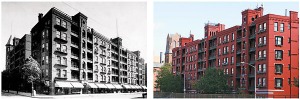
So we’re back to the Cobble Hill Towers. Frank Farella sees the possibility of these towers in the late 1970s/early 1980s – at a time when many people had given up on these once important now decrepitating gems.

He buys the Towers then goes into business with these guys, Hudson Inc. This company also saw the potential in revitalizing the New York skyline. And bringing back housing that wasn’t filled with prostitutes or drug users, but most importantly, was affordable.

These buildings were a bit of challenge though. They had gone through several rough decades, and had multiple apartments that were uninhabitable. A big reason for these destroyed apartments was the buildings original layout – it had been designed with open stair layout. This, back in the 1800s, was to prevent fires. In a crowed tenant with only one staircase – fire was a regular visitor and it quickly meant death.

But these apartments were costly “fixer-uppers”.

12scapes-600

But with the combination of a major NYC real estate group and a developer who saw both the potential and historical significance – the Cobble Hill Towers were born again.

The Towers are interesting not only for their long history and importance; but they were also one of the beginning projects for the Hudson group.  Hudson has had a significant impact not only on the Manhattan skyline, but has rapidly been increasing the Brooklyn one as well.

Bringing housing that is affordable, but also has proper living conditions is like giving a neighborhood a ridiculously good makeover – maybe one like Beyoncé would get on her day off.

This is what changes neighborhoods. This is how it begins. So I’m glad we got started. Let’s see what’s next.

———–

I’m thinking something about food. Anyone interested in a specialty? I’m kind of in the mood for some jalapeño maple corn bread… 

To Argue

I was called a ‘Yuppie’ for the first time when I was 17 years old. It was the first time I had ever heard the term outside of a John Hughes movie, and I literally had no idea of the connotation behind it. Was I being insulted? Or just routinely labeled? At the time I let it go, the social situation was a new one to me and I wasn’t about to bring more attention to the fact that I didn’t fit in. I was surrounded by people who came from a place I hadn’t experienced before and used terminology, such as ‘flatlanders’, that I had never heard before.  I came to realize they were not particularly fond of my ‘flatlander’ background or so-called ‘yuppie’ culture. For those of you who missed the 80s, with the knowledge from only watching movies, I figured out it means “Young Urban Professional” or something similar to that. It’s applicable to those who survived their hippie, conservative, veteran or other Baby Boomer stereotypical parents to then move to the “Big City” and garner fast paced monetary focused jobs – generally (or so I thought) in the 1980s. I learned then that this is a term still alive and well.

I have no opinion on yuppies, nor will I disclose if I may or may not actually be one. Perception is everything.

Where am I going with this? Gentrification*. The 1980s meant a lot of things for New York City. After the cusp, with some social issues still thriving, of the race riots, civil rights protests, porn in Times Square (can I, a millennial imagine such a thing?!) and the AIDS epidemic, the Mayors of New York City made some drastic changes. These changes led Manhattan to becoming a tourist destination and a family friendly city again. Neighborhoods which once would have been dangerous to walk through now had attractive apartments, food and culture looking to serve a new generation who hadn’t fully experienced the 1970s in NYC.

Now that speaks for Manhattan. Which is only partially the subject of this post, and maybe occasionally in this blog, but it gives a very general introduction as to why New York City and its boroughs began to change. Brooklyn is experiencing a similar revamp, although slightly later and varied heavily by neighborhood. Queens is experiencing some remodeling as well, and to be honest the Bronx is so far north I forget about it sometimes – so I focus on Brooklyn. Brooklyn is what I know right now.

I’m here to talk about how the face of Brooklyn is changing. Maybe occasionally talk about why some neighborhoods get focused on more than others, and maybe why some neighborhoods lose their identity while others keep it completely in tact.

I have some fun ideas about food – both new diverse infused dishes and ones that have been native to their neighborhoods since their inhabitants stepped off the boat at Ellis Island (Yum!), how the a burgeoning art scene can bring in socioeconomic ranges of all sorts of people and in general how architecture and construction in a few years can change the economics of a neighborhood.

So its food, art and cool buildings (and realistically copious amounts of photos) – occasionally some fiscal nonsense but hey, it can only be expected.

There is also me – the so-called Yuppie. Those of us who have flooded various neighborhoods since the first round of gentrification in the late 80s/early 90s (I’m a baby Yuppie in this case; maybe second gen. Yupster – so much more fun than Hipster! Which probably makes me sound worse. And oh shoot, I admitted it!).

I’m here and talking about it, and I’ve got my eyes on a couple of different neighborhoods. Because in Brooklyn you walk a couple blocks in a certain direction and might as well driven 30 miles to a new state.

*Definition of GENTRIFICATION
:  the process of renewal and rebuilding accompanying the influx of middle-class or affluent people into deteriorating areas that often displaces poorer residents 

A fun photo article to get started

-bklyntenant

This was a letter/ Sample writing post

I know we are not suppose to keep this as a diary but this seemed like my most relevant/recent writing sample:

This was an anniversary letter: 

So I was clearly terrified. But this is something that you were well aware of. After a couple years together it was mildly terrifying – because at some point you sink or swim in any relationship regardless. This just might have been the first most tangible time.

A new neighborhood. What does this mean for us? Ticking time bomb, shocking revelations or something even worse – just not clicking?

Patience. All I asked for and so much more than I got.

I knew you were going to experience a number of new things – experiences I was worried you were going to leave me trailing behind in the dust hoping to keep up. Experiences, even worse, that I might have already experienced and had no interest in “holding your hand” through or growing with you through. Experiences, I might not be interesting enough to run with you in.

Food. So much new food, and so much walking (and not driving) to said new food. So much new discovery, in all senses of the word. I wouldn’t call it a quick fix, but more of an easy transition of the direction of the relationship. The easy reliability of two people who lead half separate lives but really enjoy when the two journeys combine. Two people whom the combination is so important to. And the two people who have grown up, somewhat, together.

And all I could think was “let’s do this.” I love you.

Blah this was the end of the letter


Short note I left behind at the apartment as I left for work:

I realized at a certain point (pretty sure you realized a long time ago) I had to stop focusing on things that keep us apart but find all the different things that we could experience together.  Food, theatres or weird things neither of us had experiences with (glass as art and bacon duel art/food fest) to keep our lives fairly intertwined.

So lets get weird, embrace what happens and just do us.


Transitions take some time but a lot of new experiences are a great result of them.