art

For the love of man

Since I’ve been home I’ve been trying to spend some time at the Brooklyn Museum. Here is a visual when I had brief vist a few weeks ago:
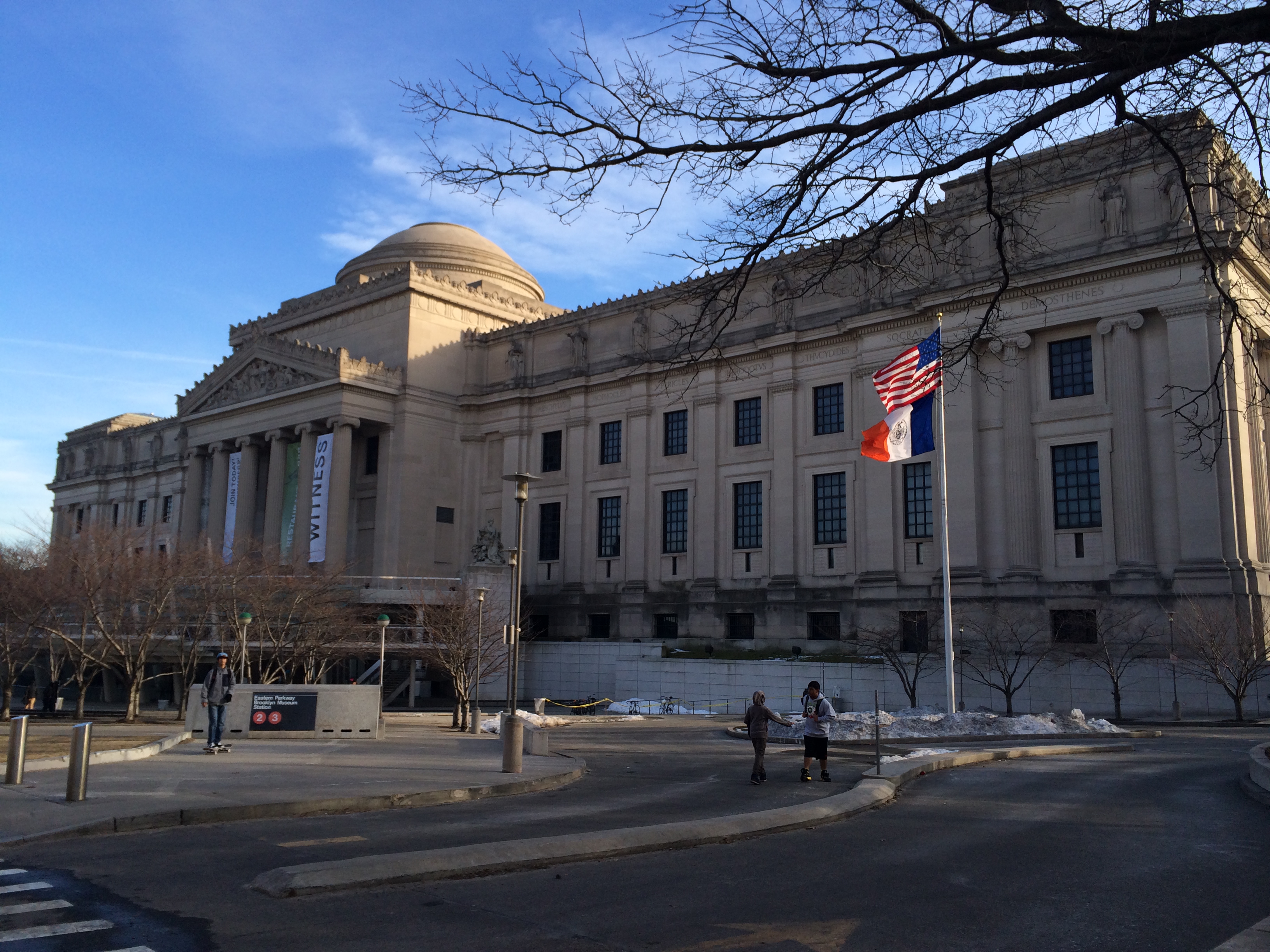
Image


Now I visited the Brooklyn Historical Society, which introduced me to New Amsterdam Brooklyn (Breukelen), but that building itself is pretty modest. It has a few floors, one exhibit change every few seasons and actually a very cool library – but nothing compared to the NYC historical society. I had naively thought the Brooklyn Museum was going to be on the same level.

I had the opportunity to return and find out some real information recently then discovered these bad boys:

Image

Not only did I have a feeling that the building was a McKim, Mead and White* but it had a few Rodin** sculptures as well. Clearly I needed to find out how they got there. 

Side note: we could easily stray off into any of these topics

So B. Gerald Cantor, who was born of immigrant parents in the Bronx went on to form Cantor Fitzgerald. That may not ring too many bells but as a native New Yorker I know the name well for their lost on 9/11. They occupied some of the top floors on One World Trade. Cantor became a successful art collector and had a particular interest for Rodin sculptures, some of which had been on display in the Cantor Fitzgerald offices in 1WT.

The Cantors generously gave the museum around 58 Rodins and an endowment that created the Iris & B. Gerald Cantor Gallery within the museum lobby. They also distributed their collection of over 300 to a variety of museums and universities.

I thought this was interesting because of the this museum’s location and reputation. I went in thinking I was going to wander a few rooms, pay too much money and possibly buy an overpriced coffee mug to help support; but I ended up finding a whole other world at the end of prospect park. I haven’t even fully explored the Egyptian Exhibit, which now I’ve only heard good things.

But sitting among these dudes in distress


Image

Can really get a girl thinking about how some of these collections come to be, and why and how importance is placed. More to come on how Egypt came to the Brooklyn Museum.


*McKim, Mead & White were a very important and prominent architectural firm around the turn of the 20th century – if you live on the East Coast you’ve probably been in one of their buildings

**Auguste Rodin was also very prominent sculptor in the turn of the 20th century; and on a personal note his work has a very special place in my heart. So this was a happy find for me.

To Argue

I was called a ‘Yuppie’ for the first time when I was 17 years old. It was the first time I had ever heard the term outside of a John Hughes movie, and I literally had no idea of the connotation behind it. Was I being insulted? Or just routinely labeled? At the time I let it go, the social situation was a new one to me and I wasn’t about to bring more attention to the fact that I didn’t fit in. I was surrounded by people who came from a place I hadn’t experienced before and used terminology, such as ‘flatlanders’, that I had never heard before.  I came to realize they were not particularly fond of my ‘flatlander’ background or so-called ‘yuppie’ culture. For those of you who missed the 80s, with the knowledge from only watching movies, I figured out it means “Young Urban Professional” or something similar to that. It’s applicable to those who survived their hippie, conservative, veteran or other Baby Boomer stereotypical parents to then move to the “Big City” and garner fast paced monetary focused jobs – generally (or so I thought) in the 1980s. I learned then that this is a term still alive and well.

I have no opinion on yuppies, nor will I disclose if I may or may not actually be one. Perception is everything.

Where am I going with this? Gentrification*. The 1980s meant a lot of things for New York City. After the cusp, with some social issues still thriving, of the race riots, civil rights protests, porn in Times Square (can I, a millennial imagine such a thing?!) and the AIDS epidemic, the Mayors of New York City made some drastic changes. These changes led Manhattan to becoming a tourist destination and a family friendly city again. Neighborhoods which once would have been dangerous to walk through now had attractive apartments, food and culture looking to serve a new generation who hadn’t fully experienced the 1970s in NYC.

Now that speaks for Manhattan. Which is only partially the subject of this post, and maybe occasionally in this blog, but it gives a very general introduction as to why New York City and its boroughs began to change. Brooklyn is experiencing a similar revamp, although slightly later and varied heavily by neighborhood. Queens is experiencing some remodeling as well, and to be honest the Bronx is so far north I forget about it sometimes – so I focus on Brooklyn. Brooklyn is what I know right now.

I’m here to talk about how the face of Brooklyn is changing. Maybe occasionally talk about why some neighborhoods get focused on more than others, and maybe why some neighborhoods lose their identity while others keep it completely in tact.

I have some fun ideas about food – both new diverse infused dishes and ones that have been native to their neighborhoods since their inhabitants stepped off the boat at Ellis Island (Yum!), how the a burgeoning art scene can bring in socioeconomic ranges of all sorts of people and in general how architecture and construction in a few years can change the economics of a neighborhood.

So its food, art and cool buildings (and realistically copious amounts of photos) – occasionally some fiscal nonsense but hey, it can only be expected.

There is also me – the so-called Yuppie. Those of us who have flooded various neighborhoods since the first round of gentrification in the late 80s/early 90s (I’m a baby Yuppie in this case; maybe second gen. Yupster – so much more fun than Hipster! Which probably makes me sound worse. And oh shoot, I admitted it!).

I’m here and talking about it, and I’ve got my eyes on a couple of different neighborhoods. Because in Brooklyn you walk a couple blocks in a certain direction and might as well driven 30 miles to a new state.

*Definition of GENTRIFICATION
:  the process of renewal and rebuilding accompanying the influx of middle-class or affluent people into deteriorating areas that often displaces poorer residents 

A fun photo article to get started

-bklyntenant