bklyn

Tenant Status

So this is the end.

I thought a few weeks ago I would be saying that about my Brooklyn stay itself, but the tides have changed and creative choices have won out over “selling out” to ‘Big Tech’ – I had no idea that there even was such a thing. What a world!

I’m excited to move forward with this blog and see what the terrible humidity of this concrete jungle will bring. I want to try to write one to two new posts each week on anecdotal topics, unless the summer is kind to me in which then I want to continue to do some research.

The Brooklyn Museum still has so many exhibits in which I have questions.

I still haven’t been to Smorgasburg and it went outdoors weeks ago! I can’t wait to have some uniquely flavored ice pops followed by Korean BBQ on a stick. Its clearly the perfect Sunday brunch.

The Brooklyn Historical Society taught me a lot about the variety of things that went on in Brooklyn from the Revolutionary War (still need to get over to Prospect Park to learn more about the Battle of Brooklyn) and Plantation Era Brooklyn to the Warehouse Era and then so much of the change of the 20th century. There is a lot of info there! Inventing Brooklyn is up and coming and I’m excited to learn and talk about it.

I don’t feel like such a yupster anymore. A year in with some dutiful research and specific practices trying to learn about this borough makes it seem like I fit in a little more.

I’ll be tweeting through @bklyntenant still, and actually already have an Instagram account for it which I will start using next weekend. Feel free to follow me – @bklyntenant to see pictures and interesting finds throughout my stay here in this borough.

This may be my permanent home. Or I may be transient. I’ll be writing about it until I call somewhere else my home. 

For the love of man

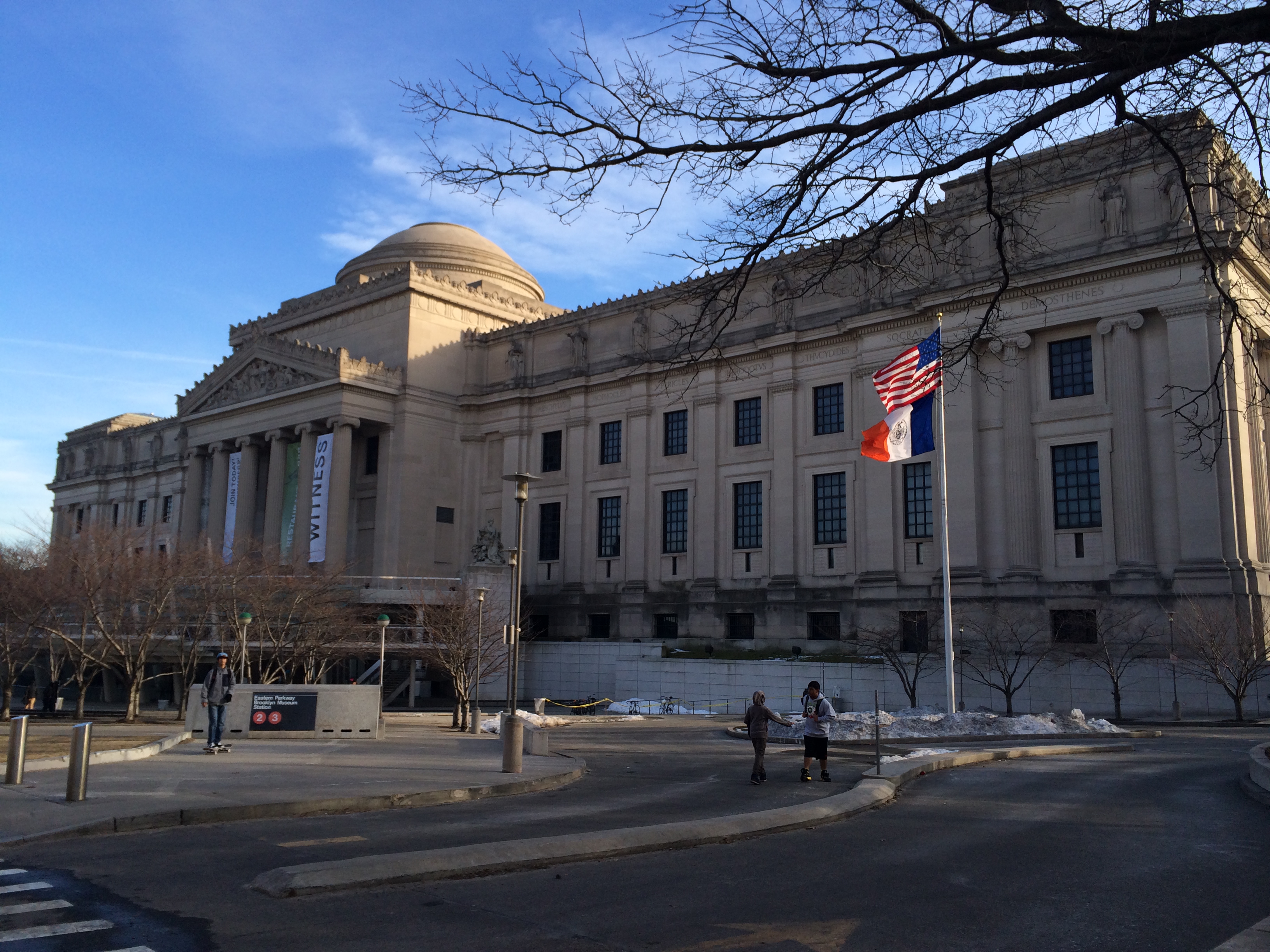
Since I’ve been home I’ve been trying to spend some time at the Brooklyn Museum. Here is a visual when I had brief vist a few weeks ago:

Image


Now I visited the Brooklyn Historical Society, which introduced me to New Amsterdam Brooklyn (Breukelen), but that building itself is pretty modest. It has a few floors, one exhibit change every few seasons and actually a very cool library – but nothing compared to the NYC historical society. I had naively thought the Brooklyn Museum was going to be on the same level.

I had the opportunity to return and find out some real information recently then discovered these bad boys:

Image

Not only did I have a feeling that the building was a McKim, Mead and White* but it had a few Rodin** sculptures as well. Clearly I needed to find out how they got there. 

Side note: we could easily stray off into any of these topics

So B. Gerald Cantor, who was born of immigrant parents in the Bronx went on to form Cantor Fitzgerald. That may not ring too many bells but as a native New Yorker I know the name well for their lost on 9/11. They occupied some of the top floors on One World Trade. Cantor became a successful art collector and had a particular interest for Rodin sculptures, some of which had been on display in the Cantor Fitzgerald offices in 1WT.

The Cantors generously gave the museum around 58 Rodins and an endowment that created the Iris & B. Gerald Cantor Gallery within the museum lobby. They also distributed their collection of over 300 to a variety of museums and universities.

I thought this was interesting because of the this museum’s location and reputation. I went in thinking I was going to wander a few rooms, pay too much money and possibly buy an overpriced coffee mug to help support; but I ended up finding a whole other world at the end of prospect park. I haven’t even fully explored the Egyptian Exhibit, which now I’ve only heard good things.

But sitting among these dudes in distress


Image

Can really get a girl thinking about how some of these collections come to be, and why and how importance is placed. More to come on how Egypt came to the Brooklyn Museum.


*McKim, Mead & White were a very important and prominent architectural firm around the turn of the 20th century – if you live on the East Coast you’ve probably been in one of their buildings

**Auguste Rodin was also very prominent sculptor in the turn of the 20th century; and on a personal note his work has a very special place in my heart. So this was a happy find for me.

What Do you have an initiative to do?

Many residents of new-eyed possible gentrifable neighborhoods have never been faced with developer dealings. They have lived their entire lives in their communities; gone to their grocers and watched their kids grow up and never thought twice about leaving or watching their neighborhood change.

In some New York City neighborhoods – the residents stepped into those streets from other countries and haven’t left; these neighborhoods represent a home away from home and their cultural identity lives on there.

In the corner of gentrification – you have tons of supporters. Those who want to invest, those who want the sense of community already ingrained and realistically those who want to make money out of the interest in a community. But how to you make sure the residents who made those neighborhoods desirable aren’t being taken advantage of?


You need to make sure they have a voice.


That’s what we do. We make sure their voice is heard.


The voice would need to come from the community – lawyers, real estate agents, accounts, neighborhood business owners and local dedicated residents would all need to come together to form a collaboration for a fair market. This would be a non-for-profit to make sure our neighborhoods stayed neighborhoods; and no residents who have made a life there had to leave or sell without understanding all their fiscal and legal rights.

We petition a variety of local & non-local lawyers, real estate agents and accounts to appraise housing on pro-bono basis; non-local so that we can have an accurate research and idea of the net worth.

We hold a series of fundraisers just to advertise and raise awareness and attract professionals to help our cause. We would first petition local Historical Organizations such as the Brooklyn Museum or the Brooklyn Historical Society to hold our events and then see if we could get sponsorships from new Brooklyn based companies to sponsor us.

It would probably take about two years to really get us moving. We would take to Social Media – Twitter, Facebook and Instagram; follow many of our local Brooklyn, Queens and Manhattan counterparts. An easy fiscal approach.

Then is getting the first investor, we would look to patrons of other Brooklyn charities; then move on the NYC museum patrons. The first six-months would be exclusively net-working, generating attention to our cause in any way we see fit; and helping philanthropists understand the importance. Possibly asking local print shops to print and donate literature.

We would hopefully after two years generate enough of a backing to create a bank of professionals.

We want to help Brooklyn.

Pitched.

  1. Where is all the HistoryAt?

An idea for an app for all mobile platforms that lets you search for places on the National Historic Preservation list within a certain radius of where you’re standing.

Then you can refine that search down to places to eat, free things to do in the area, which are good for kids and families and the top 5 (app user rating) most interesting items about the specific location.

It also shows the easiest route to get there and if you need to use public transportation or not.

It would be a mix of HopStop, Yelp and a map application all in one.

  1. Initiative for the Well-Informed

This would be a foundation to make sure that older residents of neighborhoods that developers are looking to gentrify would have access to free legal knowledge. They would also get free unbiased appraisals on what their property is worth.

This way developers and large companies who have significantly greater legal and financial resources would not as easily take advantage of community members. If residents choose to sell their property they would know they aren’t being swindled out of thousands. (If not more)

This wouldn’t apply only to residents but store owners as well, especially ones that have been in business for generations in newly lucrative areas.

We would recruit lawyers, architects, accountants and non-area based real estate agents for pro-bono work; and would also work to recruit a series of volunteers from the neighborhood itself. Preferably ones who have lived there for over ten to twenty years.

Brownstone Garage Sale


I moved to Brooklyn last May and the entire month was a blur. We had a frenzy of moving, and all of the noise that comes with it. I didn’t take in my surrounds as carefully as I do now. Then all of a sudden it was 90 degrees and every chance I got I escaped the concrete jungle.

Some places don’t have steam coming up from the streets.

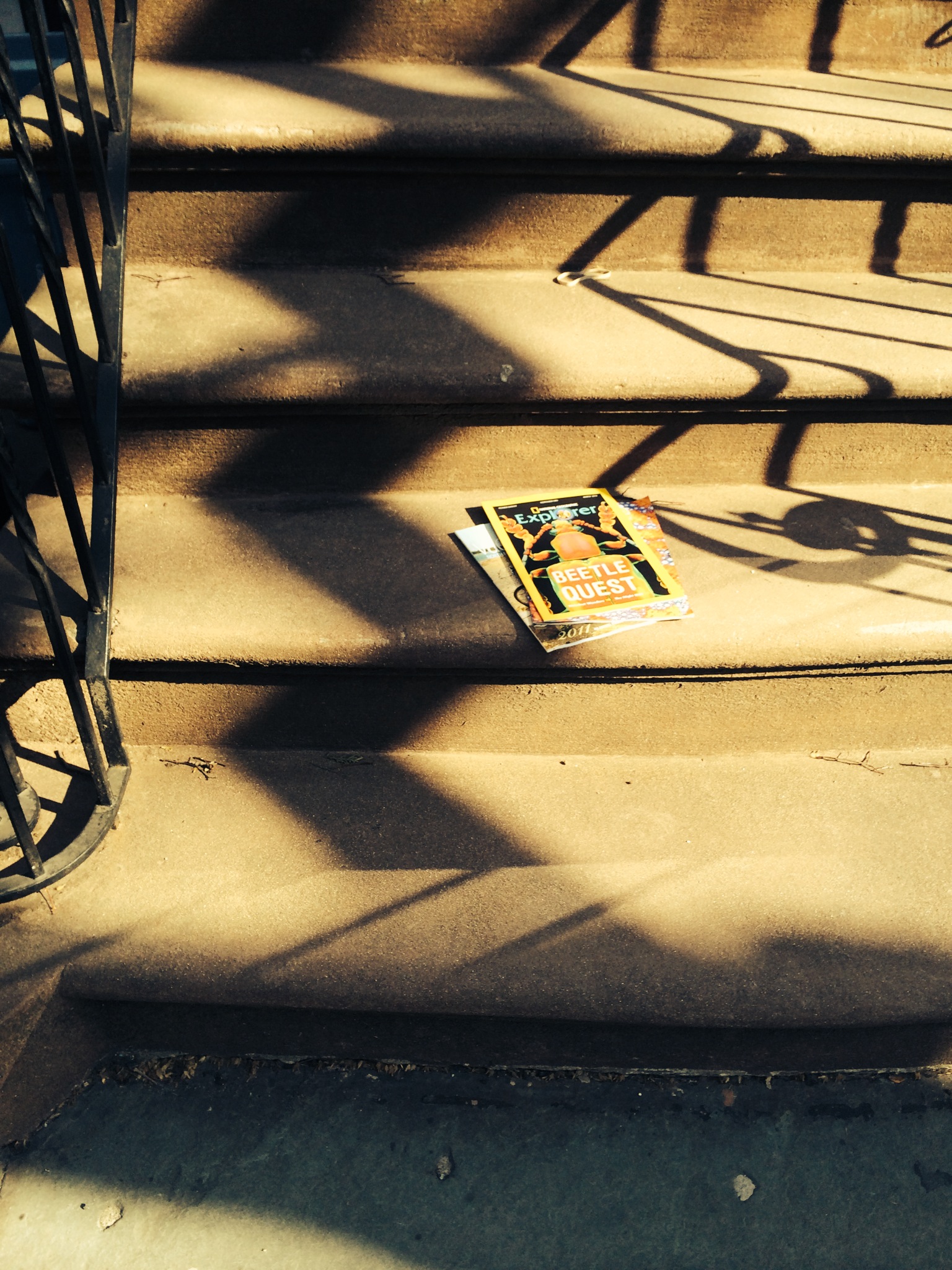
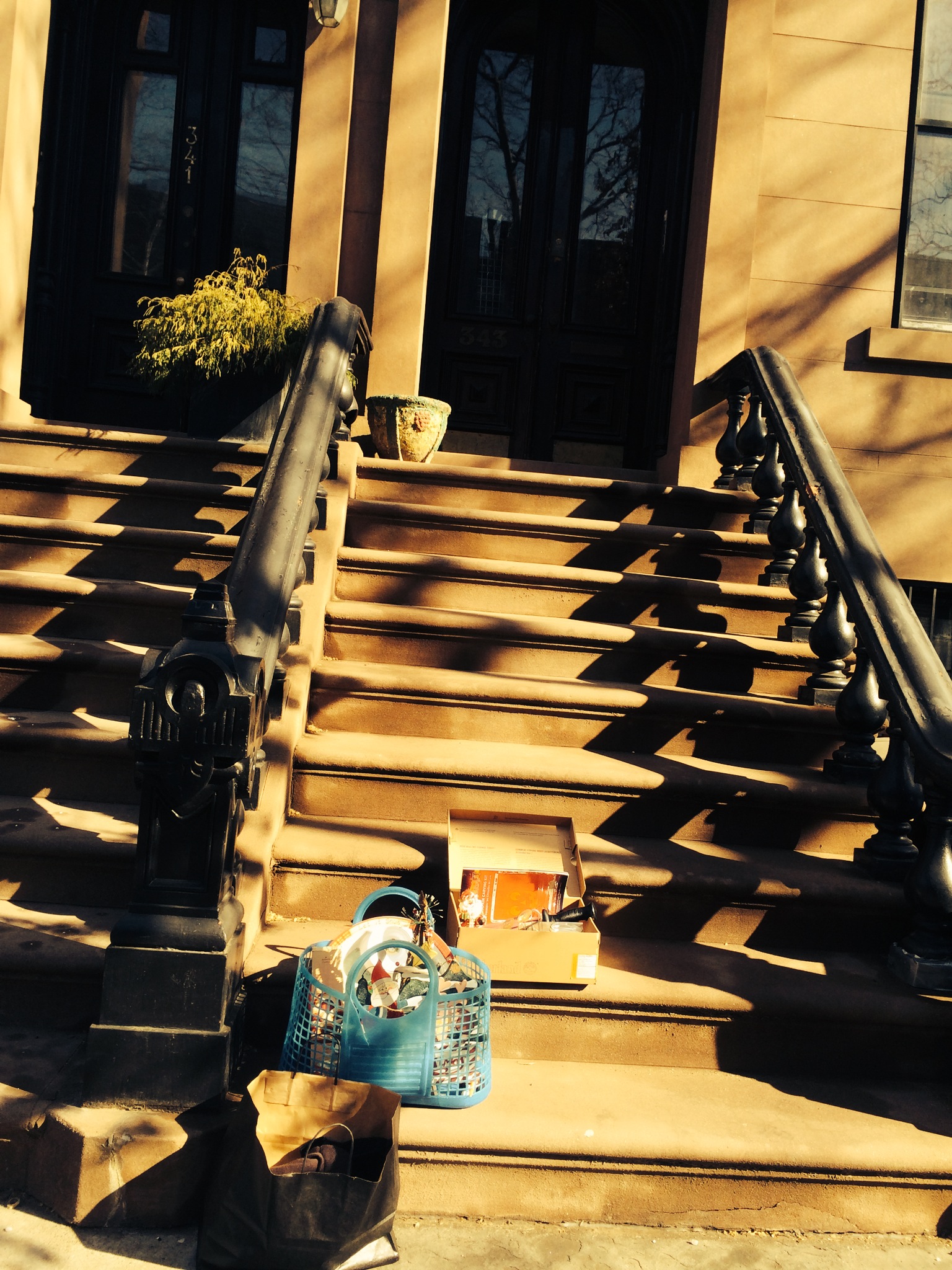
As the sun emerges and the temperatures are rising in the mercury I’ve started to notice a few interesting things. One of which is something that doggedly sticks in my head as the “Brownstone Garage Sale”. I use the word ‘doggedly’ because these are not sales or in garages.

I guess more appropriately they are Brownstone Stoop Giveaways – but for some reason that’s just as much fun to say.

IMG_0643 IMG_0644

I know in a lot of places the act of placing free items on your lawn is illegal and in violation of city codes. I haven’t looked too heavy into the stoop laws of Southern Brooklyn, but it seems like this is an accepted act.

I unfortunately do not have the fortune to live in a brownstone, so in this sense I feel slightly isolated from the community because there is no upcycling in my future.  But I have had the pleasure of seeing some pretty interesting things.


Who knows I could probably write an entire blog on stoop treasure hunting, best loot finds and most fruitful blocks.

This has been a fun find for me, and especially interesting because it’s marking the drastic turn in season here. And it’s one more little quirk I get to discover as I’m walking these streets.

The communal nature of this act is one of the hipster/yupster of the environment that I’m living in, and one that is difficult to find in an urban space. I want to find out more about it.

IMG_0645 IMG_0648 IMG_0649

The Palace Hotel poster was pretty tempting.

Midtermed

Halfway through this class.

I think I could have been a bit stronger in certain areas, a little more certain that I had something to say. Tighter even.

I want to stick with Brooklyn, I still want to wander the streets knowing and looking for things to absorb. As the weather gets nicer I think it will be easier to find the right words that I want. I want to use Brooklyn as much as I can to move me forward in my writing, and realistically just inspire me to move forward in general.

I look forward to my adventures and finding so much new information about my neighborhood, my borough and even my city. From learning that Cobble Hill was not named after a hill full of Cobblers to what makes a restaurant time and thrive in a neighborhood.

I’m realizing I like learning what has made this borough thrive in the past and how many different generations have occupied it. There have been so many things that have left their mark and so many that have vanished. It’s been incredible to uncover some of the little stones.

I do want to try for a bit more focus in my post, make them stand a little stronger; so that’s really what I’m going to try to do with the next few weeks. Make you feel the passion and the beauty of Brooklyn all in one literary sitting. Wish me luck.

I want it to keep going.

I don’t want to stop exploring.

I don’t want to give up my excuse to.

I want to move forward.

Wiki, Christ Church

Christ Church (or the Old Christ Church) is a Episcopalian congregation located on 326 Clinton Street in Cobble Hill, Brooklyn. It was founded in 1835 when there was a call for a Christian organization in some of the newly incorporated towns in Brooklyn. It was then consecrated in 1842 and currently has a congregation from Brooklyn Heights, Boerum Hill, Carroll Gardens and Cobble Hill neighborhoods.

History and Architecture

While building finished in the 1840s it was commissioned to be renovated in the 1910s. Christ Church then became well known for its Louis Comfort Tiffany altar, pulpit and windows. Tiffany was renown at the time for his work with Church windows. In 1939 a fire ripped through the church destroying most of its interior forming a need for further renovations. Most of the Tiffany interior, however, did remain in tact.

Along with most of Cobble Hill, Christ Church received historical preservation and landmark status in the 1960s.

In the early 2000s members of the congregation met when lightening first struck the roof causing damage and then met again after an earthquake shook the church in 2011. Concerns over the structure of the church were raised and renovations were made.

In the summer of 2012 heavy lightening storms initially damaged the roof of the church creating the need for further renovations. The strength of the storm caused part of the structure to fall and fatally injure a man in his 60s, once again calling the congregation to met about safety standards.

Then in the fall of 2012 Hurricane Sandy ripped off the part of the roof that was under construction, which cause significant damage to the interior. A group called the Friends of Christ Church help generate support for the restoration of their community parish.

Community Events

Christ Church host a variety of community events and is an active participant of the Cobble Hill Asscoaiton, some of its partners include:

  • The Canoni Chorale
  • The Cobble Hill Tree Fund
  • The Cobble Hill Association
  • The Clinton Street Block Association and annual Block Party
  • Linden Tree Pre-school
  • The Vertical Players Repertory Opera Company
  • The Cosmic Bicycle Theatre and the ClockWorks Puppetry Studios
  • The Cobble Hill Ballet School
  • Opera Feroce
  • The Young Actor’s Workshop
  • Music Together
  • July 4th annual neighborhood BBQ
  • Dalcroze Music
  • Integrity-Brooklyn
  • The Children’s Shadow Puppet Workshop
  • Gymstars
  • Summer Ballet Camp
  • The Cobble Hill C.S.A. Food Co-Operative
  • The Cobble Hill Health Center
  • Long Island College Hospital
  • Alcoholics Anonymous
  • Food and Winter Clothing Collection with C.H.I.P.S. (Christian Help in Park Slope)
  • CHANYS Assemblywoman Joan Millman

Christ Church celebrates all seasonal religious events.  The parish uses a garden on Clinton Street that it maintains with its “Garden Volunteers”.

The parish is a part of the Gotham Early Music Society series, and yearly Christmas caroling through Cobble Hill. 

The church also provides counseling for families, and has an attached school for special needs children.

The church hosts weddings, baptisms and regularly holds weekly services.

As of February 2014, parish services are still being held at the Kane Street Synagogue until the renovations and repairs are fully completed.

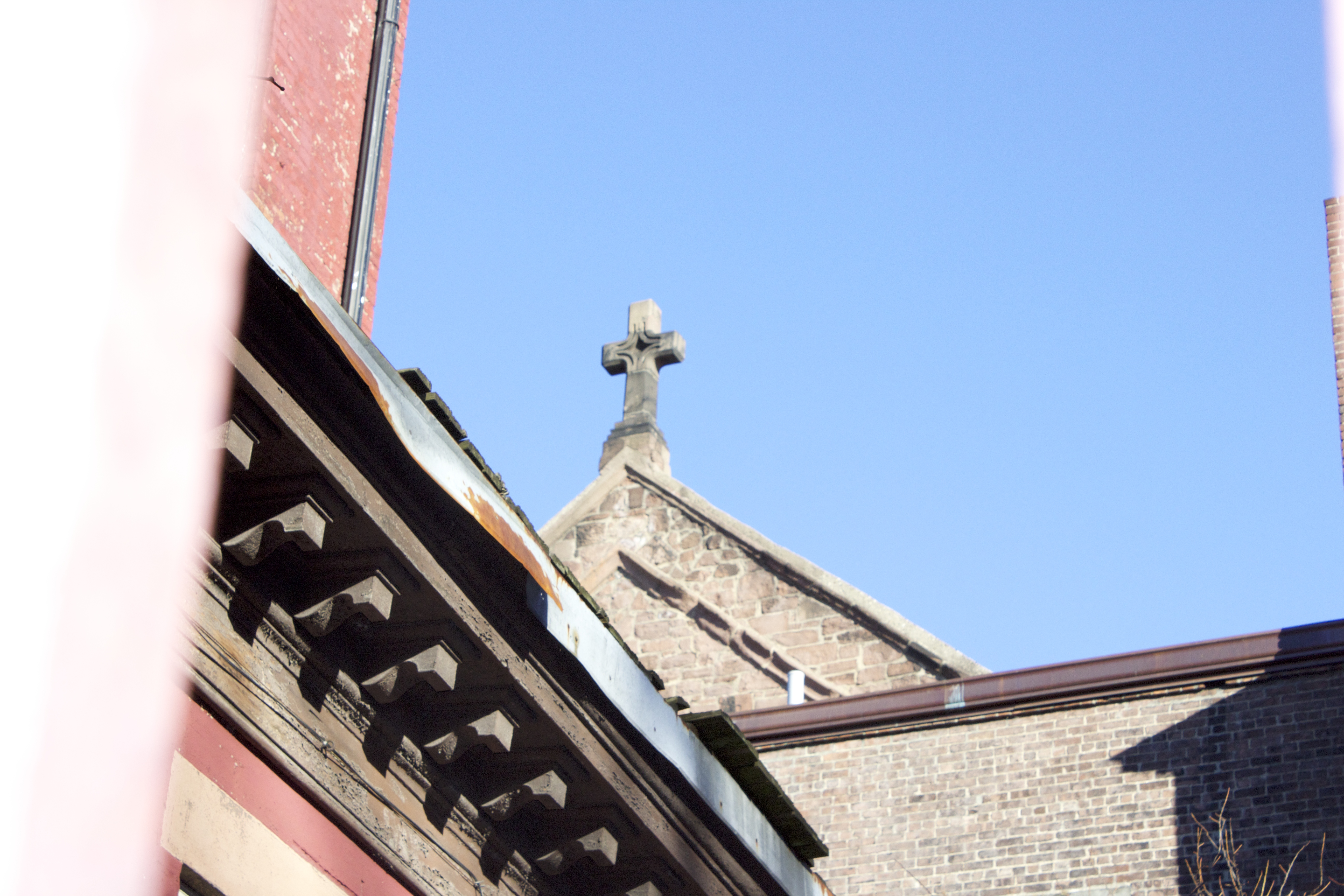
Photos:

Church images Church roof

Originals, Bklyntenant 2014

Sources:

http://cchf.tripod.com/index.html

http://www.fccch.org
http://online.wsj.com/news/articles/SB10001424127887323848804578605850058471288

Walking Brooklyn:, 30 tours exploring historical legacies, neighborhood culture, side streets and waterways. Onofri, Adrienne; 2nd Edition 2009; Wilderness Press, Berkeley, CA

The Devil on your Left Shoulder

What can I really say about Brooklyn?

There is not much that hasn’t already been said, it’s a borough that is and has been filled with aspiring (and inspiring) writers. Writers who grew up with a Brooklyn voice, writers who let Brooklyn flood them with inspiration and writers who knew this borough was where they needed to be. 

But – its also trite, it’s a cliché, and its been done -especially by the Yupster.

What is there to say?

Who am I to say it?

Some of said residents have enough money to not do anything besides write, and I do not mean for work, but for pleasure – as in they receive no monetary gain for their writing. Imagine that voice that comes from pure creativity. Aside from the fact some of these writers can scribble, or type, away all day long – their craft is apart of them. It fills their lives. Their voice is Brooklyn.

I fill my head with thoughts that are far away from Brooklyn. 

I’m detached, not as focused. My voice withering away, if it ever existed. Not to be compared to those who live and breathe talking about #cobbled streets, artisan foods and the new fused specialty place that now sells cupcakes made with booze. I’m a fraud.

Authenticity, how can you tell if you have it? Can you find it? Can you gain it?

Can I really understand the older authentic brownstone laden neighborhoods compared to the new ones created by a culture of shiny fresh high rises? I’ve barely been there a year; some people have never known anything but Brooklyn. Some could tell you that their family stepped into America and right into Brooklyn’s arms and never looked back. Or that their family has been making the same sauce in their restaurant for at least three generations. Authentic. This has never not been their lives, they can talk about it. Can I?

Who am I?

Brooklyn has a culture of arts and want-to-be artists who all want to talk about their new spaces, their new work – their new everything and anything.

My voice isn’t special. I’m not that interesting. I don’t have that much to contribute.

Where is the voice that is worth paying attention to? Do I even have it is as a writer, or at the very least as a person? My metaphorical voice that is, I am generally very vocal.

Or do I fall into the realm of other persona non grata that has flooded its buildings following the real artists in on their coattails? The shallow, the vain or those looking to pretend they have some to contribute to a vibrant community –the ones who are really just there for a flashy and hip zip code. Not there for the community.  Not there for the spirit, art, culture or dynamic that has shaped Brooklyn for all these years.

Who am I?


——-

This feels a little different than the assignment, but it was a post I was going to do on my own in the upcoming weeks. Or maybe I just freely interpreted the assignment. But I always tend to have both those Angels on my shoulders making me double think my choices. So let me just argue amongst my self doubt. 

Snip Snip

Facebook:
Bklyntenat is a place to come find pictures, restaurant reviews&links, connect with people in your neighborhood and find interesting events and concerts. She explores the Brooklyn to help you find exactly what you’re looking for, and then you can hop over to her blog to find out more information about specific neighborhoods.

Twitter:
Ask quick questions about all your favorite Brooklyn spots!
Foodie joints, concert updates, new architecture and other fast facts about Kings County!

Instagram:
The deliciousness of all things Brooklyn

Wikipedia:
Bklyntenat started as a school project that quickly exploded as a new voice on the ever changing Brooklyn scene. Now a respected food reviewer for several publications – including Edible Brooklyn, she also speaks about architecture and the history of how neighborhoods developed. Know for her authentic voice, she is a presence on the Brooklyn scene.

Staples in the Neighborhood

A bird chirped in Brooklyn! Yesterday morning I woke up to a bright window and the normal BQE (Brooklyn-Queens Expressway) noises and then realized some of the sounds I heard had been a bird. I listened further and sounds of tiny little baby birds! Polar vortex surviving baby birds!

Groundhogs can say what they want about the spring coming, but PVS baby birds sing the rest.

So like I said, I had a whole post planned that just didn’t work out. It should be noted that at some point Port Authority history is coming your way. Now that might not sound particularly interesting – I realize its heavily large ship related; but some gangster stuff, some old school political machine stuff (think Tammany Hall) and some other stuff-stuff might be included. These are all just thoughts until the weather allows me to wander around without fear of slipping on cobbled streets.

So I scrambled for something new to say, did some errands and looked around. I had a photographer friend once tell me, look for the shapes that will form the picture. I figured this post could be similar, let me see the shapes in my writing.

————

I live near a number of pretty impressive buildings, one of which are The Cobble Hill Towers. Originally built by Alfred Tredway White, who was a developer and architect that created a number of housing buildings (not projects) for city dwellers in the latter part of the 19th century. These buildings were intended to house workers who were in the shipyard, building unions or a variety of other menial jobs in the metro area.

You have to remember the other choices at this time included Lower East Side (LES, going forward) tenements. It doesn’t really seem like a tough choice when these buildings in Brooklyn included backyards and other open air spaces not as easily found in Manhattan during the 1800s.

These buildings were both an architectural statement and a statement that New York City stood for all of its inhabitants; and that they all deserved a decent place to live and play. It was a game changer for both new immigrants, but also those who had faced the dreary life of the LES. These Towers wanted to show there was a place where the American Dream was possible to all those who wanted to reach for it.

These Towers gave their inhabitants hope, and created a neighborhood along with it. Children were able to play in their inner courtyards, a novel feature in the late 1800s for NYC’s poor citizen; and all tenants could lend a hand. There was also protection for the outside dangers and exposure to violence, drugs or other street professions.

Things change.

The 1970s affected Brooklyn the same as the rest of the city. Long time dwellers of the Towers were secured in their rent-controlled apartments (meaning what they paid for rent did not match the inflation value of their apartment), coupled with the rising cost to heat the buildings because of the gas/oil crisis made it difficult to financially cover the routine maintenance. Apartments were empty, residents were cold, there was no money. Squalor had returned to #cobbled Brooklyn.

But where there is a developer with a dream, there is a possibility.

Next we’ll talk a bit more about Frank Farella, the actual architecture of the buildings and what happened to the towers. Pictures included!

Simply wandering,
bklyntenant


————

I’m definitely looking for constructive criticism on this post – was it boring? Not informative? Too long? Too short? No direction? No theme? Weird transition? No interest in hearing what happened to these staples? No idea why they were/are important to Brooklyn? (well that one will be more clear in the next post)