brooklynmuseum

Tenant Status

So this is the end.

I thought a few weeks ago I would be saying that about my Brooklyn stay itself, but the tides have changed and creative choices have won out over “selling out” to ‘Big Tech’ – I had no idea that there even was such a thing. What a world!

I’m excited to move forward with this blog and see what the terrible humidity of this concrete jungle will bring. I want to try to write one to two new posts each week on anecdotal topics, unless the summer is kind to me in which then I want to continue to do some research.

The Brooklyn Museum still has so many exhibits in which I have questions.

I still haven’t been to Smorgasburg and it went outdoors weeks ago! I can’t wait to have some uniquely flavored ice pops followed by Korean BBQ on a stick. Its clearly the perfect Sunday brunch.

The Brooklyn Historical Society taught me a lot about the variety of things that went on in Brooklyn from the Revolutionary War (still need to get over to Prospect Park to learn more about the Battle of Brooklyn) and Plantation Era Brooklyn to the Warehouse Era and then so much of the change of the 20th century. There is a lot of info there! Inventing Brooklyn is up and coming and I’m excited to learn and talk about it.

I don’t feel like such a yupster anymore. A year in with some dutiful research and specific practices trying to learn about this borough makes it seem like I fit in a little more.

I’ll be tweeting through @bklyntenant still, and actually already have an Instagram account for it which I will start using next weekend. Feel free to follow me – @bklyntenant to see pictures and interesting finds throughout my stay here in this borough.

This may be my permanent home. Or I may be transient. I’ll be writing about it until I call somewhere else my home. 
For the love of man

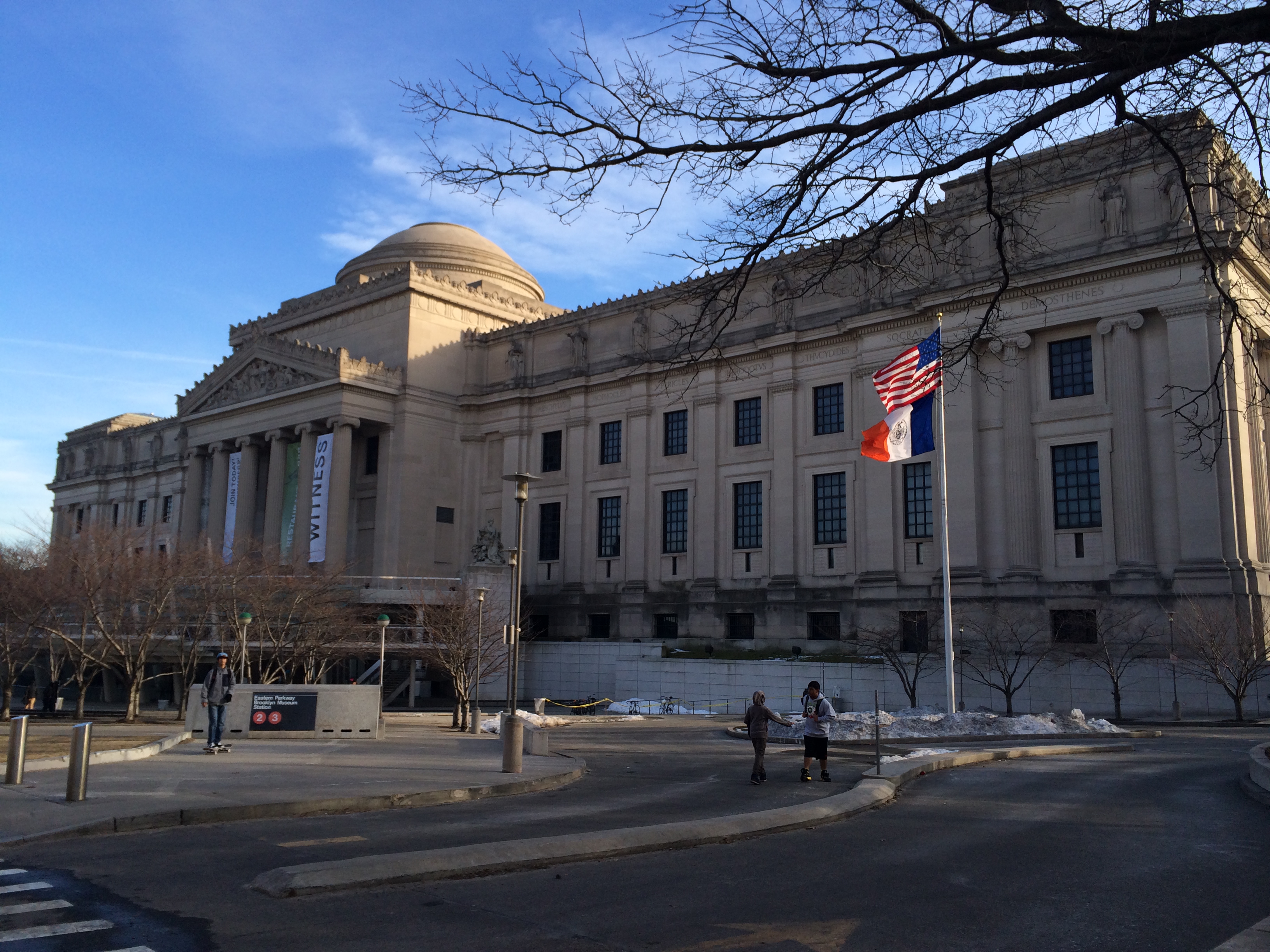
Since I’ve been home I’ve been trying to spend some time at the Brooklyn Museum. Here is a visual when I had brief vist a few weeks ago:

Image


Now I visited the Brooklyn Historical Society, which introduced me to New Amsterdam Brooklyn (Breukelen), but that building itself is pretty modest. It has a few floors, one exhibit change every few seasons and actually a very cool library – but nothing compared to the NYC historical society. I had naively thought the Brooklyn Museum was going to be on the same level.

I had the opportunity to return and find out some real information recently then discovered these bad boys:

Image

Not only did I have a feeling that the building was a McKim, Mead and White* but it had a few Rodin** sculptures as well. Clearly I needed to find out how they got there. 

Side note: we could easily stray off into any of these topics

So B. Gerald Cantor, who was born of immigrant parents in the Bronx went on to form Cantor Fitzgerald. That may not ring too many bells but as a native New Yorker I know the name well for their lost on 9/11. They occupied some of the top floors on One World Trade. Cantor became a successful art collector and had a particular interest for Rodin sculptures, some of which had been on display in the Cantor Fitzgerald offices in 1WT.

The Cantors generously gave the museum around 58 Rodins and an endowment that created the Iris & B. Gerald Cantor Gallery within the museum lobby. They also distributed their collection of over 300 to a variety of museums and universities.

I thought this was interesting because of the this museum’s location and reputation. I went in thinking I was going to wander a few rooms, pay too much money and possibly buy an overpriced coffee mug to help support; but I ended up finding a whole other world at the end of prospect park. I haven’t even fully explored the Egyptian Exhibit, which now I’ve only heard good things.

But sitting among these dudes in distress


Image

Can really get a girl thinking about how some of these collections come to be, and why and how importance is placed. More to come on how Egypt came to the Brooklyn Museum.


*McKim, Mead & White were a very important and prominent architectural firm around the turn of the 20th century – if you live on the East Coast you’ve probably been in one of their buildings

**Auguste Rodin was also very prominent sculptor in the turn of the 20th century; and on a personal note his work has a very special place in my heart. So this was a happy find for me.