history

Tenant Status

So this is the end.

I thought a few weeks ago I would be saying that about my Brooklyn stay itself, but the tides have changed and creative choices have won out over “selling out” to ‘Big Tech’ – I had no idea that there even was such a thing. What a world!

I’m excited to move forward with this blog and see what the terrible humidity of this concrete jungle will bring. I want to try to write one to two new posts each week on anecdotal topics, unless the summer is kind to me in which then I want to continue to do some research.

The Brooklyn Museum still has so many exhibits in which I have questions.

I still haven’t been to Smorgasburg and it went outdoors weeks ago! I can’t wait to have some uniquely flavored ice pops followed by Korean BBQ on a stick. Its clearly the perfect Sunday brunch.

The Brooklyn Historical Society taught me a lot about the variety of things that went on in Brooklyn from the Revolutionary War (still need to get over to Prospect Park to learn more about the Battle of Brooklyn) and Plantation Era Brooklyn to the Warehouse Era and then so much of the change of the 20th century. There is a lot of info there! Inventing Brooklyn is up and coming and I’m excited to learn and talk about it.

I don’t feel like such a yupster anymore. A year in with some dutiful research and specific practices trying to learn about this borough makes it seem like I fit in a little more.

I’ll be tweeting through @bklyntenant still, and actually already have an Instagram account for it which I will start using next weekend. Feel free to follow me – @bklyntenant to see pictures and interesting finds throughout my stay here in this borough.

This may be my permanent home. Or I may be transient. I’ll be writing about it until I call somewhere else my home. 

For the love of man

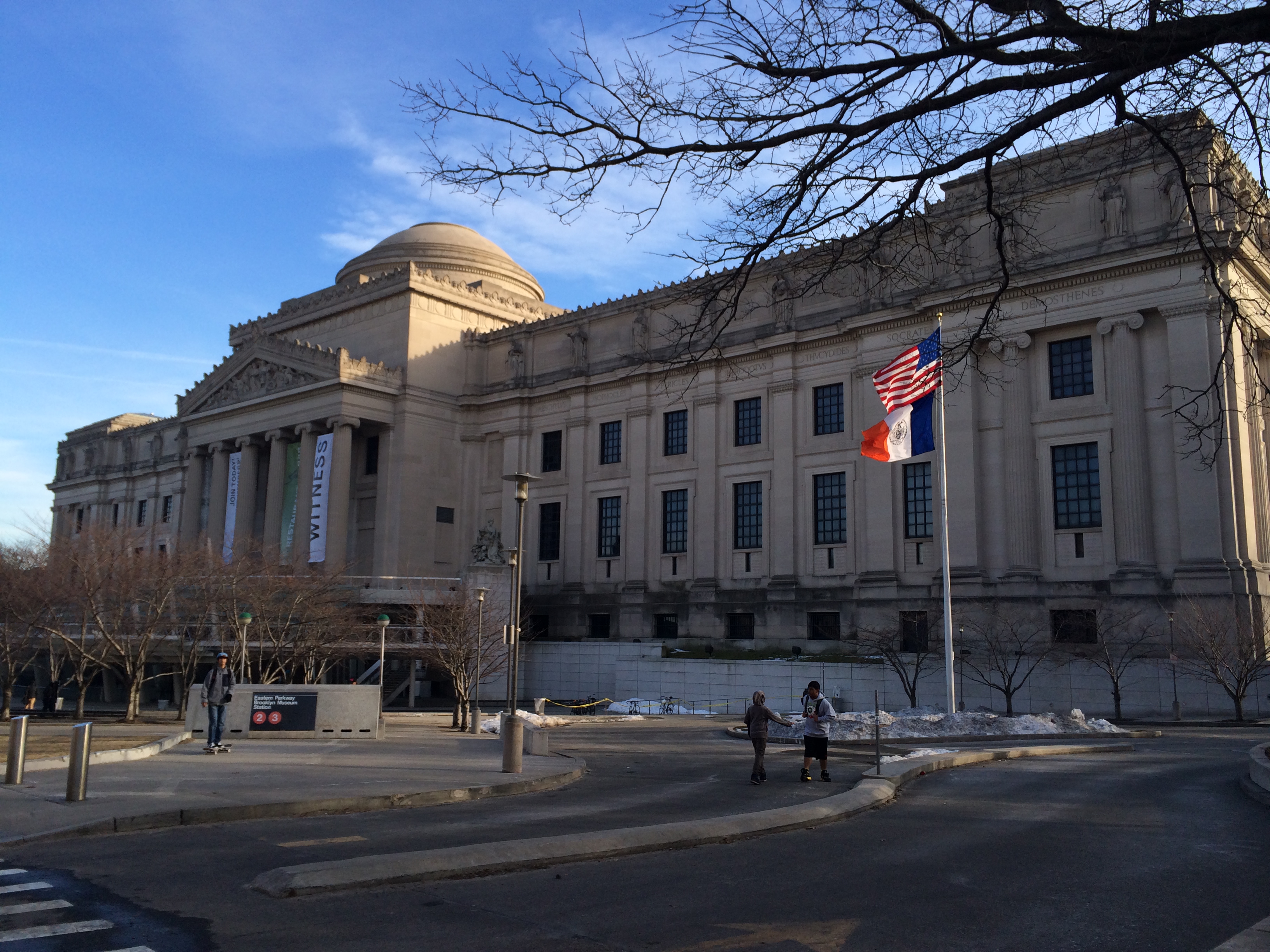
Since I’ve been home I’ve been trying to spend some time at the Brooklyn Museum. Here is a visual when I had brief vist a few weeks ago:

Image


Now I visited the Brooklyn Historical Society, which introduced me to New Amsterdam Brooklyn (Breukelen), but that building itself is pretty modest. It has a few floors, one exhibit change every few seasons and actually a very cool library – but nothing compared to the NYC historical society. I had naively thought the Brooklyn Museum was going to be on the same level.

I had the opportunity to return and find out some real information recently then discovered these bad boys:

Image

Not only did I have a feeling that the building was a McKim, Mead and White* but it had a few Rodin** sculptures as well. Clearly I needed to find out how they got there. 

Side note: we could easily stray off into any of these topics

So B. Gerald Cantor, who was born of immigrant parents in the Bronx went on to form Cantor Fitzgerald. That may not ring too many bells but as a native New Yorker I know the name well for their lost on 9/11. They occupied some of the top floors on One World Trade. Cantor became a successful art collector and had a particular interest for Rodin sculptures, some of which had been on display in the Cantor Fitzgerald offices in 1WT.

The Cantors generously gave the museum around 58 Rodins and an endowment that created the Iris & B. Gerald Cantor Gallery within the museum lobby. They also distributed their collection of over 300 to a variety of museums and universities.

I thought this was interesting because of the this museum’s location and reputation. I went in thinking I was going to wander a few rooms, pay too much money and possibly buy an overpriced coffee mug to help support; but I ended up finding a whole other world at the end of prospect park. I haven’t even fully explored the Egyptian Exhibit, which now I’ve only heard good things.

But sitting among these dudes in distress


Image

Can really get a girl thinking about how some of these collections come to be, and why and how importance is placed. More to come on how Egypt came to the Brooklyn Museum.


*McKim, Mead & White were a very important and prominent architectural firm around the turn of the 20th century – if you live on the East Coast you’ve probably been in one of their buildings

**Auguste Rodin was also very prominent sculptor in the turn of the 20th century; and on a personal note his work has a very special place in my heart. So this was a happy find for me.

Pitched.

  1. Where is all the HistoryAt?

An idea for an app for all mobile platforms that lets you search for places on the National Historic Preservation list within a certain radius of where you’re standing.

Then you can refine that search down to places to eat, free things to do in the area, which are good for kids and families and the top 5 (app user rating) most interesting items about the specific location.

It also shows the easiest route to get there and if you need to use public transportation or not.

It would be a mix of HopStop, Yelp and a map application all in one.

  1. Initiative for the Well-Informed

This would be a foundation to make sure that older residents of neighborhoods that developers are looking to gentrify would have access to free legal knowledge. They would also get free unbiased appraisals on what their property is worth.

This way developers and large companies who have significantly greater legal and financial resources would not as easily take advantage of community members. If residents choose to sell their property they would know they aren’t being swindled out of thousands. (If not more)

This wouldn’t apply only to residents but store owners as well, especially ones that have been in business for generations in newly lucrative areas.

We would recruit lawyers, architects, accountants and non-area based real estate agents for pro-bono work; and would also work to recruit a series of volunteers from the neighborhood itself. Preferably ones who have lived there for over ten to twenty years.

Midtermed

Halfway through this class.

I think I could have been a bit stronger in certain areas, a little more certain that I had something to say. Tighter even.

I want to stick with Brooklyn, I still want to wander the streets knowing and looking for things to absorb. As the weather gets nicer I think it will be easier to find the right words that I want. I want to use Brooklyn as much as I can to move me forward in my writing, and realistically just inspire me to move forward in general.

I look forward to my adventures and finding so much new information about my neighborhood, my borough and even my city. From learning that Cobble Hill was not named after a hill full of Cobblers to what makes a restaurant time and thrive in a neighborhood.

I’m realizing I like learning what has made this borough thrive in the past and how many different generations have occupied it. There have been so many things that have left their mark and so many that have vanished. It’s been incredible to uncover some of the little stones.

I do want to try for a bit more focus in my post, make them stand a little stronger; so that’s really what I’m going to try to do with the next few weeks. Make you feel the passion and the beauty of Brooklyn all in one literary sitting. Wish me luck.

I want it to keep going.

I don’t want to stop exploring.

I don’t want to give up my excuse to.

I want to move forward.

Sam’s

This weekend I did not waste the 50-degree and sunny weather.

I walked a bit, I thought a bit, I researched a bit, snapped a bit and ate a bit. I could feel myself reacquainting with that old #cobbled feeling and all I could think was “Thank god I didn’t forget how to type properly formed sentences because of perpetual darkness”.

Wall Street/Brooklyn waterfront

I am realizing as I look more into Cobble Hill, I am finding one dominating fact – “Historically an Italian neighborhood.” Having a community with a common cultural identifier is not unique to any one city, but some have stronger roots than others.

Why is Cobble Hill historically an Italian community?

There are certainly other neighborhoods that blare their Italian roots in all five boroughs; from Little Italy (obviously) to Staten Island, their origins as cultural enclaves are pretty clear.

I want to find out about Cobble Hill.

Long story short, I didn’t get any immediate answers this weekend. But I did start somewhere fun.

Sam’s.

I wrote about picking a pizza place so I decided to use my list and pick a pizza place. Except I didn’t actually get pizza, and I got distracted by a very talkative bartender.

Sam’s is old school. The waiter knew all the little kids sitting at the booths, chatted amicably with the parents about a variety of things from church to soccer (or football; even though I’m pretty sure the parents had no idea he was talking about European football).  The bread was put on the table with a warning not to eat it – you better make sure you have room for the pasta. A phrase and warning I had only ever heard from my friend’s Sicilian grandmother.  I loved every minute of it.

Don't eat the bread

I went for comfort. I went for meatballs. No regrets.

Meatballz

Sam has been around since the 30s and it shows; years of history could be felt on its walls. It’s one of the last comfortably warm and low key Italian places on a street that is slowly filling with trendy upscale restaurants; but it was a start for me to see why Cobble Hill is a historically Italian because it’s historically Italian.

3 generations

So starting the search, figured some historically Italian food could only inspire me.

Back to being #Cobbled

So we’re back to the Cobble Hill Towers. Frank Farella sees the possibility of these towers in the late 1970s/early 1980s – at a time when many people had given up on these once important now decrepitating gems.

He buys the Towers then goes into business with these guys, Hudson Inc. This company also saw the potential in revitalizing the New York skyline. And bringing back housing that wasn’t filled with prostitutes or drug users, but most importantly, was affordable.

These buildings were a bit of challenge though. They had gone through several rough decades, and had multiple apartments that were uninhabitable. A big reason for these destroyed apartments was the buildings original layout – it had been designed with open stair layout. This, back in the 1800s, was to prevent fires. In a crowed tenant with only one staircase – fire was a regular visitor and it quickly meant death.

But these apartments were costly “fixer-uppers”.

12scapes-600

But with the combination of a major NYC real estate group and a developer who saw both the potential and historical significance – the Cobble Hill Towers were born again.

The Towers are interesting not only for their long history and importance; but they were also one of the beginning projects for the Hudson group.  Hudson has had a significant impact not only on the Manhattan skyline, but has rapidly been increasing the Brooklyn one as well.

Bringing housing that is affordable, but also has proper living conditions is like giving a neighborhood a ridiculously good makeover – maybe one like Beyoncé would get on her day off.

This is what changes neighborhoods. This is how it begins. So I’m glad we got started. Let’s see what’s next.

———–

I’m thinking something about food. Anyone interested in a specialty? I’m kind of in the mood for some jalapeño maple corn bread… 

Staples in the Neighborhood

A bird chirped in Brooklyn! Yesterday morning I woke up to a bright window and the normal BQE (Brooklyn-Queens Expressway) noises and then realized some of the sounds I heard had been a bird. I listened further and sounds of tiny little baby birds! Polar vortex surviving baby birds!

Groundhogs can say what they want about the spring coming, but PVS baby birds sing the rest.

So like I said, I had a whole post planned that just didn’t work out. It should be noted that at some point Port Authority history is coming your way. Now that might not sound particularly interesting – I realize its heavily large ship related; but some gangster stuff, some old school political machine stuff (think Tammany Hall) and some other stuff-stuff might be included. These are all just thoughts until the weather allows me to wander around without fear of slipping on cobbled streets.

So I scrambled for something new to say, did some errands and looked around. I had a photographer friend once tell me, look for the shapes that will form the picture. I figured this post could be similar, let me see the shapes in my writing.

————

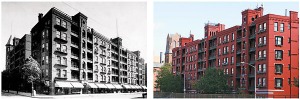
I live near a number of pretty impressive buildings, one of which are The Cobble Hill Towers. Originally built by Alfred Tredway White, who was a developer and architect that created a number of housing buildings (not projects) for city dwellers in the latter part of the 19th century. These buildings were intended to house workers who were in the shipyard, building unions or a variety of other menial jobs in the metro area.

You have to remember the other choices at this time included Lower East Side (LES, going forward) tenements. It doesn’t really seem like a tough choice when these buildings in Brooklyn included backyards and other open air spaces not as easily found in Manhattan during the 1800s.

These buildings were both an architectural statement and a statement that New York City stood for all of its inhabitants; and that they all deserved a decent place to live and play. It was a game changer for both new immigrants, but also those who had faced the dreary life of the LES. These Towers wanted to show there was a place where the American Dream was possible to all those who wanted to reach for it.

These Towers gave their inhabitants hope, and created a neighborhood along with it. Children were able to play in their inner courtyards, a novel feature in the late 1800s for NYC’s poor citizen; and all tenants could lend a hand. There was also protection for the outside dangers and exposure to violence, drugs or other street professions.

Things change.

The 1970s affected Brooklyn the same as the rest of the city. Long time dwellers of the Towers were secured in their rent-controlled apartments (meaning what they paid for rent did not match the inflation value of their apartment), coupled with the rising cost to heat the buildings because of the gas/oil crisis made it difficult to financially cover the routine maintenance. Apartments were empty, residents were cold, there was no money. Squalor had returned to #cobbled Brooklyn.

But where there is a developer with a dream, there is a possibility.

Next we’ll talk a bit more about Frank Farella, the actual architecture of the buildings and what happened to the towers. Pictures included!

Simply wandering,
bklyntenant


————

I’m definitely looking for constructive criticism on this post – was it boring? Not informative? Too long? Too short? No direction? No theme? Weird transition? No interest in hearing what happened to these staples? No idea why they were/are important to Brooklyn? (well that one will be more clear in the next post)
History (Resume)

Objective: All around learner of life, Sociologist at heart but thats a hard occupation to pay the bills with. Studier of people and the culture they surround themselves all while communicating with them effectively.
EXPERIENCE

Regional Hospital, January 2011 – Present, Marketing Novice
Hired into a new position, responsible for the creation of journal ads, community newspaper ads, invitations for our physician dinners, and creative design for community events. Extensive research projects with the goal of increasing community engagement and working to develop a better understanding of the markets we target.

Then in another – also new – position, responsibility additional to my ongoing creative projects with the expansion of larger ad campaigns, video editing for our social media pages, and departmental branding within multiple disciplines (microbranding based on departments’ wants and needs). Helped these departments create a well-rounded brand by designing flyers, brochures, and other advertorial materials.

Advertising Agency, Summer 2009, Marketing&Advertising Guppy
Nationally known full service advertising and marketing firm with 50 in house: account managers; graphic designers; print designers; TV and internet producers and website designers.
Worked with account executives as well as the creative team to throughout development of a variety of advertising campaigns. Part of a team that worked extensively to create a full campaigns from print to digital. Oversaw presentations to clients including creative design for both layout and front/back end coding for websites.        

Regional Law Frim, P.C. Summers 2004- 2008, Reoccurring Marketing Character 
Regional corporate law firm of 90 attorneys
Worked with the marketing department to develop intra-office websites and law blogs; conducted marketing research; organize seminars and outreach events; and created the firm’s first marketing video.

EDUCATION

The University of  the North East, BA – May 2010
Major: International Studies
Minor: Media