icm506

Which Coast is Best?

New York City has been trying to bring the tech industry to them for the last few decades. It has succeeded in gaining a Google and Facebook along with hundreds of other smaller firms, much to the delight of former mayor Michael Bloomberg. Bloomberg worked hard and fast to make NYC an appealing place for new companies, some of which he hoped would leave their valley on the other coast.

Silicon Valley has held a tight grip on tech firms and isn’t looking for them to go anywhere any time soon. The capital that these firms bring in is enormous and important to the state and region.

Tim D., a developer of a new start-up firm that created a photography application for smartphones has said, “I think its a culture [Silicon Valley] that’s proven to be resilient and adaptable to how things have changed over the last 40 years. It’s not perfect but I think it’s done a lot to shape how we as a society have gotten to where we are today.”

But New York City has been changing over the last 30 years and gentrification has taken hold in certain boroughs. Brooklyn in particular has had an industry change. During and post the World Wars Brooklyn served as an important port and industrial borough. Large factories lined the waterfront and it was mainly used to ferry various things into Manhattan.

The neighborhood of DUMBO (Down Under the Manhattan Bridge Overpass) started to change things around the turn of the millennium. Large real estate investors bought a bunch of property and old warehouse buildings and began to gentrify them. Jay Street in particular now serves over 30 different start-ups in converted open space warehouses. But the appeal is easily seen for creative for the small office spaces of NYC. The ability for young developers to create how they please is seemingly more appealing than joining some of the massive corporations in Palo Alto. It is a innovation atmosphere as oppose to being a cog in the machine.

“The Community for it [creative programming] in SV is way bigger, you can’t get a cup of coffee without overhearing a pitch happening or people talking shop…NY is cool because it’s a part of something much bigger, not just tech.” Jen M., a front end designer for a Brooklyn start-up.

It has yet to be determined if New York City’s push for technology firms to relocate will be entirely successful. The small firms can enclave themselves in the old warehouse but the room in which giant tech companies can spread may always give the west coast the upper hand.


FREE Brooklyn

icm 506 module 9 SLIDE SHOW icm 506 module 9 SLIDE SHOW

Problem Statement:

Brooklyn neighborhoods are gentrifying rapidly. Areas that use to house projects and lower income families are quickly seeing high rises, condominiums and townhouses appearing – and they see their rent and taxes growing as well. More often than not they sell their property to developers for significantly less than its actual value, and they have no idea they are being swindled out of their property.  Then they are forced to move into different areas that may have more crime and conflict then their original neighborhoods.

Idea:

We help provide free facts, resources, education and economic knowledge to the residents of Kings County, Brooklyn. We ask lawyers, real estate agents and accountantsto provide pro-bono work for our organization and help residents in gentrifying neighborhoods understand how much their property is really worth.

We are F (facts) R (resources) E (education) E (economic knowledge) Brooklyn.

Introduction:

Homelessness. Helplessness. Hardship.

Brooklyn is a borough of New York City with dozens of different neighborhoods. It has seen many different faces over the last 400 years and constantly been changing, each period has left behind its unique mark.

In the 1970s into the 1980s the borough of Manhattan was a scary place to be, filled with drugs, prostitutes and gangs causing residents to flee the city. Developers eyed this new trend and sought to capture the new markets. The old brownstones in Brooklyn, while decaying, became significantly more appealing. While Brooklyn had its own crime troubles, developers began slowly with one neighborhood at a time.

Before you knew it housing that was once cheap and easy to rent was attracting attention from the affluent Upper East and West sides and droves of people were moving down to southern New York City- just what real estate developers wanted.

But what happens to the people who were there before them? The people who didn’t make six figures a year and were happy with their local neighborhood; its mom and pop shops, local news papers and in some communities English wasn’t the first language.

The developing happened slowly, methodically and was well done by developers. Starting slowly in communities, flipping brownstones and offering in some areas the possibility of rent control on a newly renovated buildings was enough to keep residents happy.

But sometimes management gets turned over in a few years or the building becomes a co-op or “goes condo” and all of a sudden these long standing residents have no way of paying an extremely higher rent in a short amount of time.

Project Description:


What FREE Brooklyn wants to do is make sure that all residents of Brooklyn have access to real estate knowledge.  We want them to understand legally what is available to them, and what possible future actions could be taken against them. What their real estate rights are and what it means for the future of their family. We want to give them non-biased real estate information and help with their financial questions. And we hope to do this in whatever their first language may be.

We want the playing field to be fair. We want a FREE Brooklyn.

We want to assemble a Board of Directors from all different professions and neighborhoods from Brooklyn. They would be leaders in their respective fields and have a genuine understanding of what their community needs. They would lead the non-profit in the majority of its decision-making, and have varied opinions based on their experiences and what to move forward with next. The strength of the Board is also integral in helping find lawyers, accountants and real estate agents do pro-bono work for the initiative. We would rely on their previous involvement in their communities to form these connections. Finding a Board that we can rely on with this plan would be one of our first big hurdles.

The second biggest hurdle is funding. First there are obvious out of pocket expenses – travel time, getting the word out there, probably some various forms of printing (whether it be posters, flyers or small ads in local papers). Before you can even start with KickStarter people need to know you’re starting. This is where networking will play a huge role, our first members would start to become involved in other non-for-profits that are trying to help the people of Brooklyn:

Red Hook Initiative

Cobble Hill Tree Fund

Cobble Hill Life Care

Families First Brooklyn

Atlantic Avenue Local Development Corporation

Just to name a few. While there might be competition for resources, there is still more power in numbers. This would take some time to garner attention but necessary to gain a good reputation; then comes the KickStarter.

At this point we would have our volunteers also attending town hall and chamber of commerce meetings – trying to get to know various communities, their main merchants and their local politicians. We get to know them and they get to know us, mutual relationships begin to form and the word has the ability to spread organically. These relationships may also help us form the appropriate Board of Directors.

We also have a dynamic social media plan. We will highlight local businesses using by using hashtags and directly mentioning them in our FREEBrooklyn blog posts. We will have a presence on: Facebook, Twitter, Instagram, Pintrest and Google+. We will shop local, eat local and be local. By joining the community will establish ourselves more firmly.


And if we believe in our cause, speak from the heart and move in the right direction we may have a beginning of a project that could really help the community.

To invest in us in investing in a better Brooklyn and a better way of living for residents who haven’t had the access to the resources they need. Whether they lack in education or cannot speak English every resident of Brooklyn deserves a fair place to live and we want to help them achieve that.


Budget:

The biggest fiscal challenges are space, office supplies and marketing. The space needs to be accessible to the people we are trying help, 3-5 office staff members and a place for our board to have meetings.

We will spend a fair amount of time figuring out what neighborhood in Brooklyn we want to have our office in; we need 1300-1600 square feet and have to allocate at least $4,000-$10,000 a month in rent.

Office supplies range from $150-1,000 depending on the month with a yearly budget of $5,000; at the end of the fiscal year this would be reviewed incase we are under/over allocating in certain supply areas. There is a separate budget for outside printing of $3,000 a year; also to be reviewed in June.  Outside printing are for flyers, posters and possible advertising opportunities.

We want to hire an Office Manager, a Development Director (preferably who would have some background experience with Marketing and Advertising) and a Social Worker. When we gain the funds add one or two more Social Workers, a Finance Manager and a Public Relations Director. The additional staff will be directed by the Board of Directors.

The payment is range based on level of experience:

Office Manager: $30,000- $37,000 a year

Development: Director $65,00 – $75,000

Social Worker:  $45,000, $55,000

About:

My name is Alicia Strain, and I’m looking to help the community members of Brooklyn. I have been working for a non-for-profit Hospital in their Marketing and Public Affairs department for the last three years, and have developed a keen understanding of the non-for-profit world. I routinely work with our Finance department and have created yearly budgets for the purposes of advertising and development in the community. I also have experienced working directly with under-privileged families by volunteering my time at the Family and Children’s Association; this organization helps families gain access to education, avoid homelessness and helps both seniors and veterans. I have also devoted time to the Women’s Fund of Long Island in their development office, this non-for-profit helps promotes and gives access to education for the underserved female community on Long Island. I have also volunteered Sara Holbrook Community Center in Burlington, Vermont during my time there. I have been in the Brooklyn community for about a year now, and can already see the need for an organization to help promote education and awareness for families. And I want to get it started today.
 

youtube doing it rightly meta

I thought it would be interesting to choose the new YouTube Advertising campaign as sort of a Meta social media campaign topic. 

I was sort of surprised that YouTube felt it had to launch any sort of campaign all together, and then used its own “over million followers” celebrities to back it.

Which is even more interesting is that one of their first half year chosen ones is also running in a Diet Dr. Pepper campaign. It’s been a good year for Michelle Phan. But women want the easy accessibility to good makeup tips without having to pay $60.00 dollars at Bloomingdales. She’s a genius.

I find this campaign interesting because it speaks down to the core of what most YouTube users want – millions of fans. Or conversely they want a real person helping them with everyday tasks, not an overpaid unauthentic writer from Betty Crocker. This time I’m channeling Rosanna Pansino.

It also allows a cute fashion blogger who doesn’t seem threatening or catty – an important element in the women’s realm. She seems down to earth, relatable and someone who could honestly be your best friend – here’s looking at you Bethany Mota.

Honesty and authenticity. Well played YouTube advertisers. It’s the base line of your brand and its what consumers are quickly eating up.

 I work in Healthcare advertising and the somewhat newest trend is finding and attracting new consumers through our most trustworthy source – happy patients.  Not actors saying they received surgery when they haven’t; but honest people who really enjoyed (to the degree you can) their stay at our Hospital. In some sense the campaign is easier than others we’ve run – the content has written itself, and we know there are no holes in it.

I struggled with whether or not I could be an authentic Brooklyn writer or if I was a transient whose voice wouldn’t – or worse shouldn’t – matter.

YouTube would be an important tool for FREE Brooklyn. It’s a free and open media channel, and it is such good friends with Google. It is a service that has been profitable for many non-for-profits and small business. It can create and grow them. Those lovely ladies are examples of that, and clearly the larger Google seems the potential of letting people know that. Who knows which personalities, business or cats they may choose to broadcast nationally in the future.

I think if we would use YouTube for FREE Brooklyn we would have to focus on the authentic content. I don’t think there would be any reason to stray from it. We would need the real, honest and heartfelt work we would do to push us forward. Investors and the community would need to see we are helping and making a change.  

People like to see other people helping people. There is no reason not to let our possible resources stay under the rug. The more people who know about FREE Brooklyn leads to more people who are willing to help. Where could you go wrong?

For the love of man

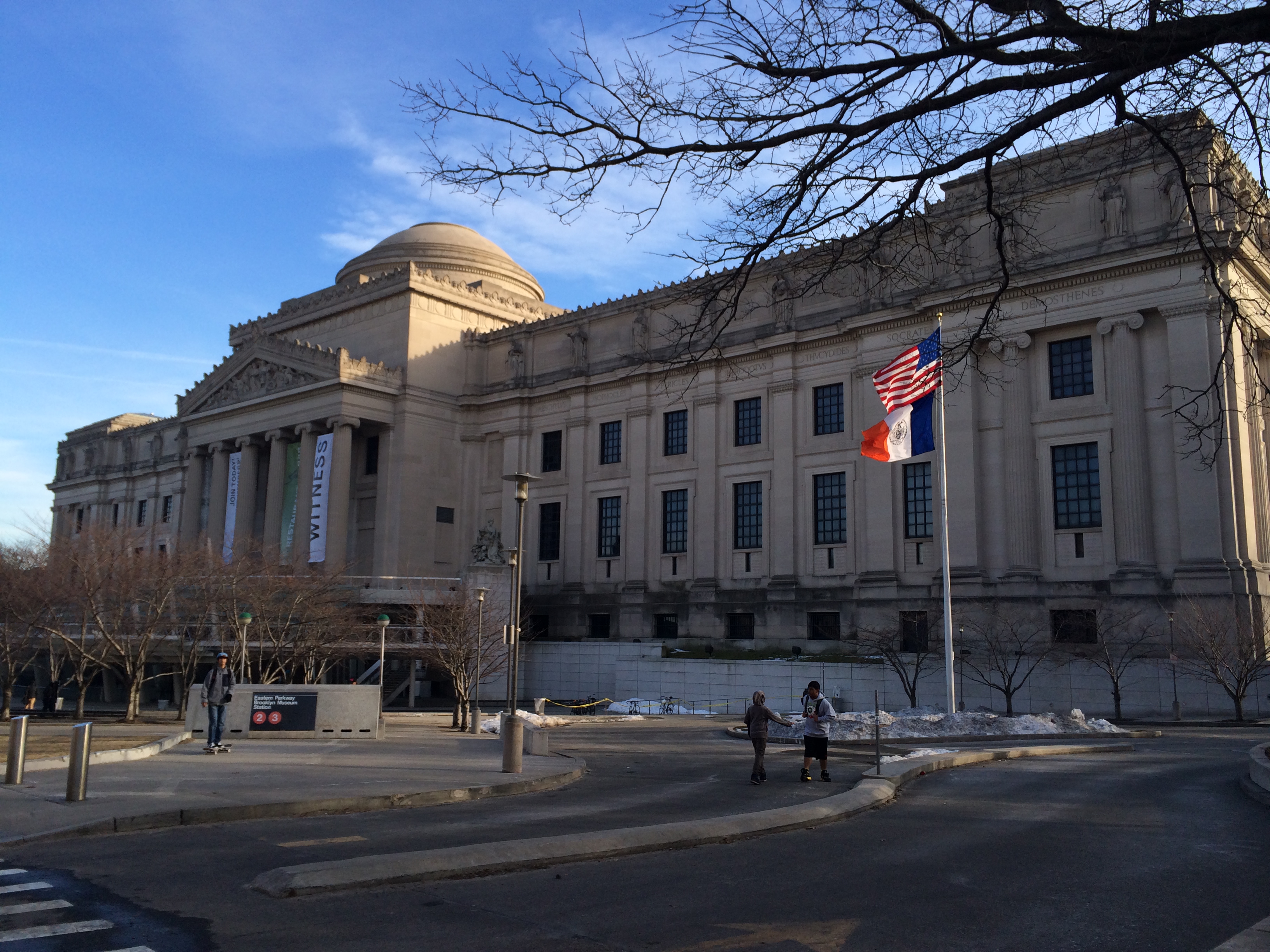
Since I’ve been home I’ve been trying to spend some time at the Brooklyn Museum. Here is a visual when I had brief vist a few weeks ago:

Image


Now I visited the Brooklyn Historical Society, which introduced me to New Amsterdam Brooklyn (Breukelen), but that building itself is pretty modest. It has a few floors, one exhibit change every few seasons and actually a very cool library – but nothing compared to the NYC historical society. I had naively thought the Brooklyn Museum was going to be on the same level.

I had the opportunity to return and find out some real information recently then discovered these bad boys:

Image

Not only did I have a feeling that the building was a McKim, Mead and White* but it had a few Rodin** sculptures as well. Clearly I needed to find out how they got there. 

Side note: we could easily stray off into any of these topics

So B. Gerald Cantor, who was born of immigrant parents in the Bronx went on to form Cantor Fitzgerald. That may not ring too many bells but as a native New Yorker I know the name well for their lost on 9/11. They occupied some of the top floors on One World Trade. Cantor became a successful art collector and had a particular interest for Rodin sculptures, some of which had been on display in the Cantor Fitzgerald offices in 1WT.

The Cantors generously gave the museum around 58 Rodins and an endowment that created the Iris & B. Gerald Cantor Gallery within the museum lobby. They also distributed their collection of over 300 to a variety of museums and universities.

I thought this was interesting because of the this museum’s location and reputation. I went in thinking I was going to wander a few rooms, pay too much money and possibly buy an overpriced coffee mug to help support; but I ended up finding a whole other world at the end of prospect park. I haven’t even fully explored the Egyptian Exhibit, which now I’ve only heard good things.

But sitting among these dudes in distress


Image

Can really get a girl thinking about how some of these collections come to be, and why and how importance is placed. More to come on how Egypt came to the Brooklyn Museum.


*McKim, Mead & White were a very important and prominent architectural firm around the turn of the 20th century – if you live on the East Coast you’ve probably been in one of their buildings

**Auguste Rodin was also very prominent sculptor in the turn of the 20th century; and on a personal note his work has a very special place in my heart. So this was a happy find for me.

where have you been?

So the last month has been a bit wild. With a lot of noise.

But also yesterday I smelled BBQ in this lovely cobbled neighborhood, so I know Spring is here:

Image


I’ve been back and forth between the East and West Coast during the month of April because of some life changing decisions. Womp Womp, nothing will be finalized for another six months – so limbo is the fun pace of life right now.

But sometimes you get these gems:

Image


And you realize reflection is also a pretty good tool to have. I’ll have a serial number of posts up today, and if I need sleep, tomorrow. But I’m trying to do my best and figure out what is what.

-Cobbled (for now)

Pitched.

  1. Where is all the HistoryAt?

An idea for an app for all mobile platforms that lets you search for places on the National Historic Preservation list within a certain radius of where you’re standing.

Then you can refine that search down to places to eat, free things to do in the area, which are good for kids and families and the top 5 (app user rating) most interesting items about the specific location.

It also shows the easiest route to get there and if you need to use public transportation or not.

It would be a mix of HopStop, Yelp and a map application all in one.

  1. Initiative for the Well-Informed

This would be a foundation to make sure that older residents of neighborhoods that developers are looking to gentrify would have access to free legal knowledge. They would also get free unbiased appraisals on what their property is worth.

This way developers and large companies who have significantly greater legal and financial resources would not as easily take advantage of community members. If residents choose to sell their property they would know they aren’t being swindled out of thousands. (If not more)

This wouldn’t apply only to residents but store owners as well, especially ones that have been in business for generations in newly lucrative areas.

We would recruit lawyers, architects, accountants and non-area based real estate agents for pro-bono work; and would also work to recruit a series of volunteers from the neighborhood itself. Preferably ones who have lived there for over ten to twenty years.

Staples in the Neighborhood

A bird chirped in Brooklyn! Yesterday morning I woke up to a bright window and the normal BQE (Brooklyn-Queens Expressway) noises and then realized some of the sounds I heard had been a bird. I listened further and sounds of tiny little baby birds! Polar vortex surviving baby birds!

Groundhogs can say what they want about the spring coming, but PVS baby birds sing the rest.

So like I said, I had a whole post planned that just didn’t work out. It should be noted that at some point Port Authority history is coming your way. Now that might not sound particularly interesting – I realize its heavily large ship related; but some gangster stuff, some old school political machine stuff (think Tammany Hall) and some other stuff-stuff might be included. These are all just thoughts until the weather allows me to wander around without fear of slipping on cobbled streets.

So I scrambled for something new to say, did some errands and looked around. I had a photographer friend once tell me, look for the shapes that will form the picture. I figured this post could be similar, let me see the shapes in my writing.

————

I live near a number of pretty impressive buildings, one of which are The Cobble Hill Towers. Originally built by Alfred Tredway White, who was a developer and architect that created a number of housing buildings (not projects) for city dwellers in the latter part of the 19th century. These buildings were intended to house workers who were in the shipyard, building unions or a variety of other menial jobs in the metro area.

You have to remember the other choices at this time included Lower East Side (LES, going forward) tenements. It doesn’t really seem like a tough choice when these buildings in Brooklyn included backyards and other open air spaces not as easily found in Manhattan during the 1800s.

These buildings were both an architectural statement and a statement that New York City stood for all of its inhabitants; and that they all deserved a decent place to live and play. It was a game changer for both new immigrants, but also those who had faced the dreary life of the LES. These Towers wanted to show there was a place where the American Dream was possible to all those who wanted to reach for it.

These Towers gave their inhabitants hope, and created a neighborhood along with it. Children were able to play in their inner courtyards, a novel feature in the late 1800s for NYC’s poor citizen; and all tenants could lend a hand. There was also protection for the outside dangers and exposure to violence, drugs or other street professions.

Things change.

The 1970s affected Brooklyn the same as the rest of the city. Long time dwellers of the Towers were secured in their rent-controlled apartments (meaning what they paid for rent did not match the inflation value of their apartment), coupled with the rising cost to heat the buildings because of the gas/oil crisis made it difficult to financially cover the routine maintenance. Apartments were empty, residents were cold, there was no money. Squalor had returned to #cobbled Brooklyn.

But where there is a developer with a dream, there is a possibility.

Next we’ll talk a bit more about Frank Farella, the actual architecture of the buildings and what happened to the towers. Pictures included!

Simply wandering,
bklyntenant


————

I’m definitely looking for constructive criticism on this post – was it boring? Not informative? Too long? Too short? No direction? No theme? Weird transition? No interest in hearing what happened to these staples? No idea why they were/are important to Brooklyn? (well that one will be more clear in the next post)

History (Resume)

Objective: All around learner of life, Sociologist at heart but thats a hard occupation to pay the bills with. Studier of people and the culture they surround themselves all while communicating with them effectively.
EXPERIENCE

Regional Hospital, January 2011 – Present, Marketing Novice
Hired into a new position, responsible for the creation of journal ads, community newspaper ads, invitations for our physician dinners, and creative design for community events. Extensive research projects with the goal of increasing community engagement and working to develop a better understanding of the markets we target.

Then in another – also new – position, responsibility additional to my ongoing creative projects with the expansion of larger ad campaigns, video editing for our social media pages, and departmental branding within multiple disciplines (microbranding based on departments’ wants and needs). Helped these departments create a well-rounded brand by designing flyers, brochures, and other advertorial materials.

Advertising Agency, Summer 2009, Marketing&Advertising Guppy
Nationally known full service advertising and marketing firm with 50 in house: account managers; graphic designers; print designers; TV and internet producers and website designers.
Worked with account executives as well as the creative team to throughout development of a variety of advertising campaigns. Part of a team that worked extensively to create a full campaigns from print to digital. Oversaw presentations to clients including creative design for both layout and front/back end coding for websites.        

Regional Law Frim, P.C. Summers 2004- 2008, Reoccurring Marketing Character 
Regional corporate law firm of 90 attorneys
Worked with the marketing department to develop intra-office websites and law blogs; conducted marketing research; organize seminars and outreach events; and created the firm’s first marketing video.

EDUCATION

The University of  the North East, BA – May 2010
Major: International Studies
Minor: Media


This was a letter/ Sample writing post

I know we are not suppose to keep this as a diary but this seemed like my most relevant/recent writing sample:

This was an anniversary letter: 

So I was clearly terrified. But this is something that you were well aware of. After a couple years together it was mildly terrifying – because at some point you sink or swim in any relationship regardless. This just might have been the first most tangible time.

A new neighborhood. What does this mean for us? Ticking time bomb, shocking revelations or something even worse – just not clicking?

Patience. All I asked for and so much more than I got.

I knew you were going to experience a number of new things – experiences I was worried you were going to leave me trailing behind in the dust hoping to keep up. Experiences, even worse, that I might have already experienced and had no interest in “holding your hand” through or growing with you through. Experiences, I might not be interesting enough to run with you in.

Food. So much new food, and so much walking (and not driving) to said new food. So much new discovery, in all senses of the word. I wouldn’t call it a quick fix, but more of an easy transition of the direction of the relationship. The easy reliability of two people who lead half separate lives but really enjoy when the two journeys combine. Two people whom the combination is so important to. And the two people who have grown up, somewhat, together.

And all I could think was “let’s do this.” I love you.

Blah this was the end of the letter


Short note I left behind at the apartment as I left for work:

I realized at a certain point (pretty sure you realized a long time ago) I had to stop focusing on things that keep us apart but find all the different things that we could experience together.  Food, theatres or weird things neither of us had experiences with (glass as art and bacon duel art/food fest) to keep our lives fairly intertwined.

So lets get weird, embrace what happens and just do us.


Transitions take some time but a lot of new experiences are a great result of them.